ARTIST / WHO ART YOU
Charles Osawa
Discarded matter & epoxy sculpture
A New York sculptor transforming discarded matter and resin into figures, architectural structures and lighting objects that reconsider material value.
Enter the conversation ↗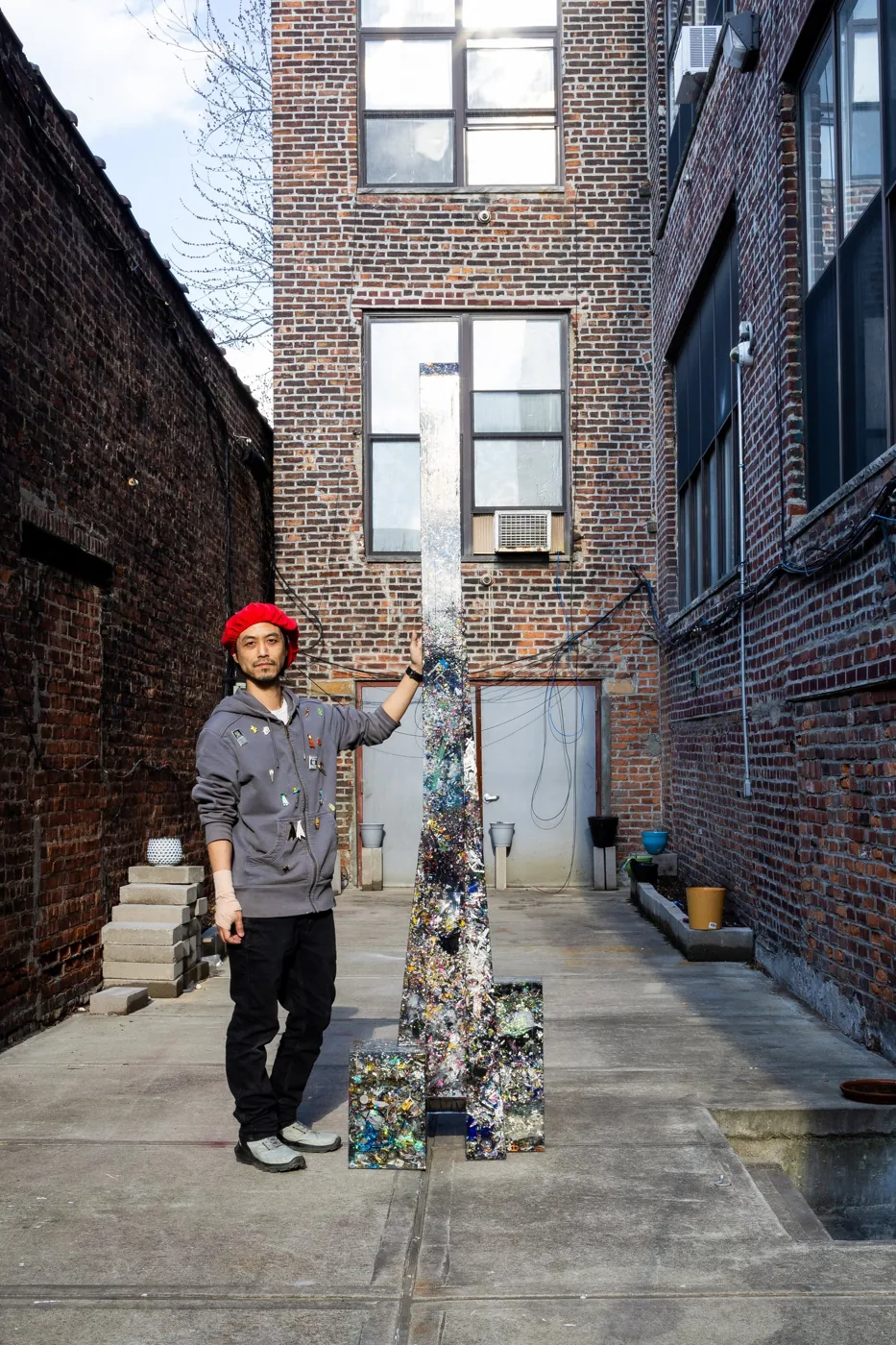
Practice & background
Charles Osawa is a sculptor working primarily with discarded materials and resin. Born in Los Angeles in 1983 and based in New York, he studied interior and architectural design at Parsons and completed a BFA in Architectural Design in 2008. His practice brings structural thinking to the transformation of discarded matter.
In the NURSE series, waste from hospital wards becomes sculptural material. Zoid – The White Trash Lamp (2022) combines epoxy resin, trash and LED light, bringing reclaimed matter into the form of a lighting object. His website also presents Megastructure 001 (2025), made with upcycled trash and epoxy resin.
NURSE brings attention to waste associated with hospital care. NURSE JODY (v3.1N), from his third generation of standardized trash sculptures, is approximately four inches tall, encouraging close attention to embedded fragments. At eight feet high, Megastructure 001 (2025) takes related material concerns to an architectural scale. His website also records the 2025 Emerging Artist and Denis Diderot grants from Château d’Orquevaux.
In Who Art You, Osawa describes the concentration required to break down materials and mix resin as a meditative moment when physical action can interrupt overthinking. He identifies Andy Warhol’s idea of art as a mirror as an influence. Transforming neglected material becomes, in his account, both a reflection of society and a hopeful metaphor for change.
Looking at the work
Discarded matter is broken down and combined with resin, creating tension between its earlier use and new form. First try to identify the material, then ask whether becoming a sculpture or lamp changes the value you assign to it.
IN THE ARTIST’S WORDS
“Because sometimes when you're thinking too much, your hands get stuck.”Explore the conversation ↗
Works & practice
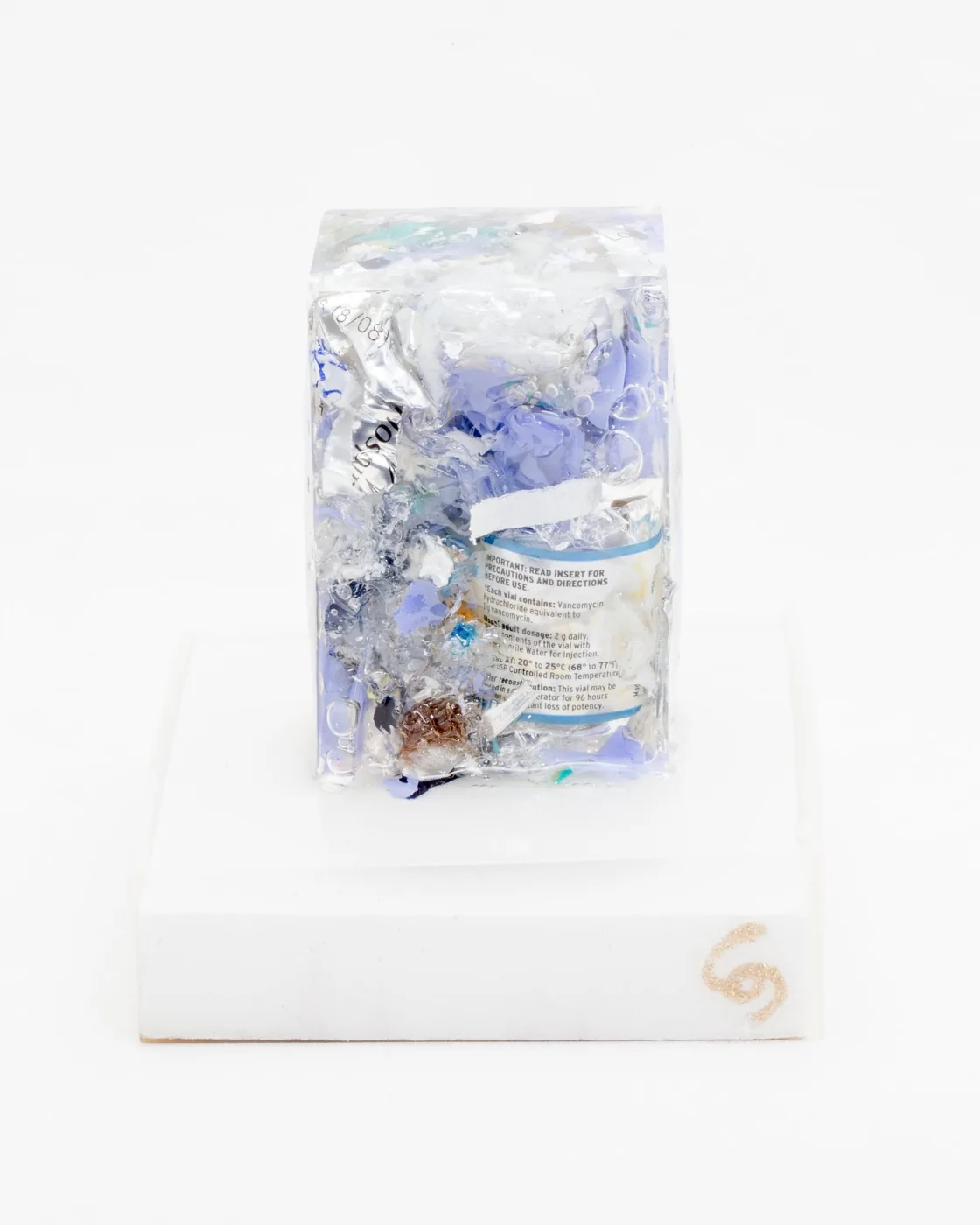
NURSE JODY (v3.1N), size S; sculpture repurposing hospital-ward waste, approximately 4 inches tall.
Charles Osawa · View original source ↗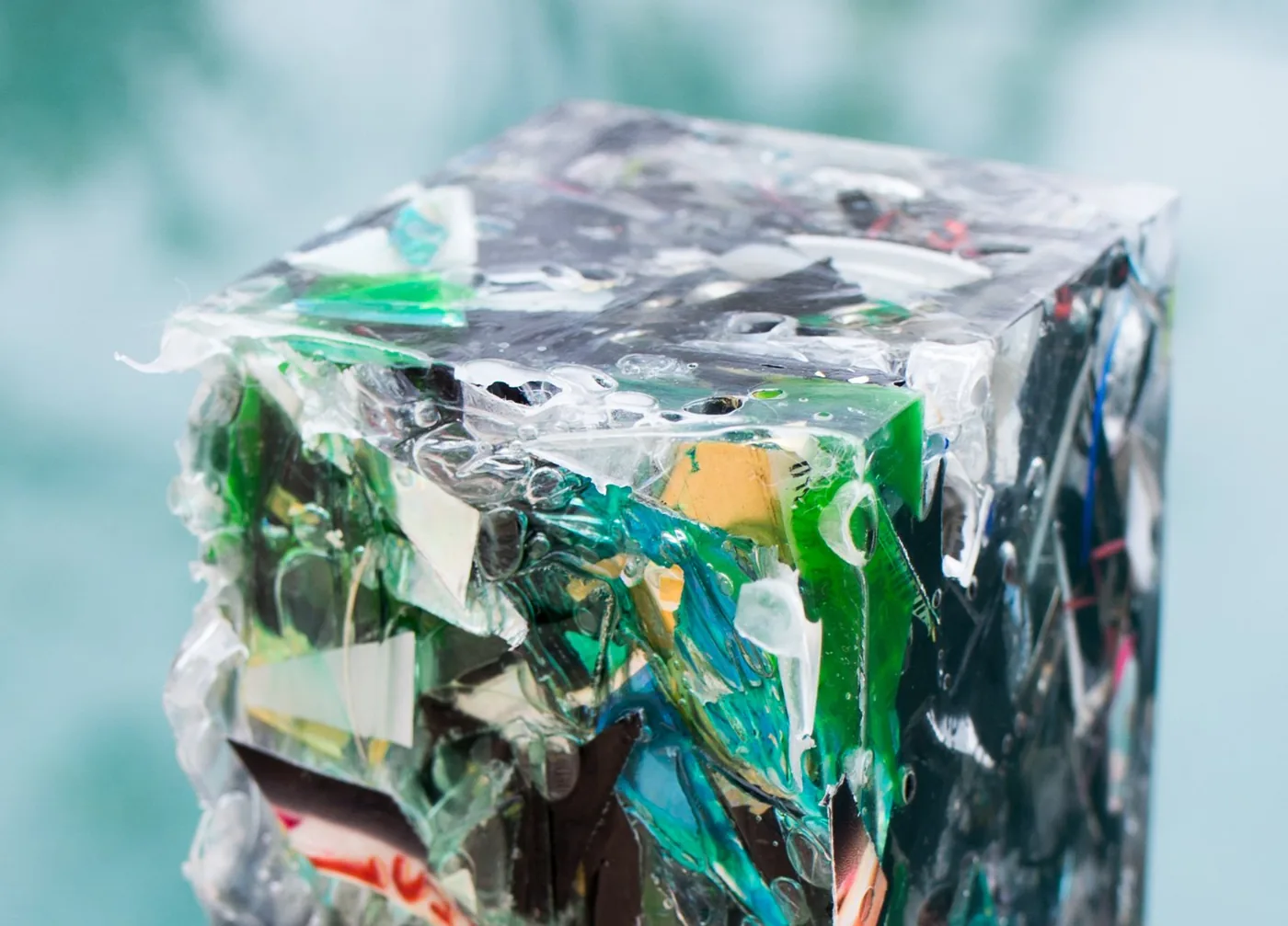
Detail of a work using resin and reclaimed material, from the artist’s website.
Charles Osawa · View original source ↗A few words to look with
Epoxy resin
A resin that hardens through a chemical reaction and is used for coating, bonding and casting. In Osawa’s interview, it makes discarded matter visible within an enclosing layer; handling requires material-specific safety precautions.
Found object
An existing object incorporated into art rather than made entirely from raw material. Its former function, wear and history may become part of the work’s meaning.
Upcycling
Turning materials that might otherwise be discarded into new uses or works, often retaining and reorganising the material. Look for traces of its previous life and what the new use changes.
Works & further reading
Continue with the artist’s own work and institutional sources.
Artist website ↗- 藝術家官網|Biography & Megastructure 001 ↗
- 藝術家官網|NURSE 系列 ↗
- Ilon Art Gallery / Artsy|Zoid – The White Trash Lamp ↗
Profile based on the sources listed above; the conversation informs the viewing questions and work guides.