ARTIST / WHO ART YOU
Dan Lythcott-Haims
Patina, found objects & time
A photographer, sculptor and assemblage artist attending to rusted objects and the textures left by time.
Enter the conversation ↗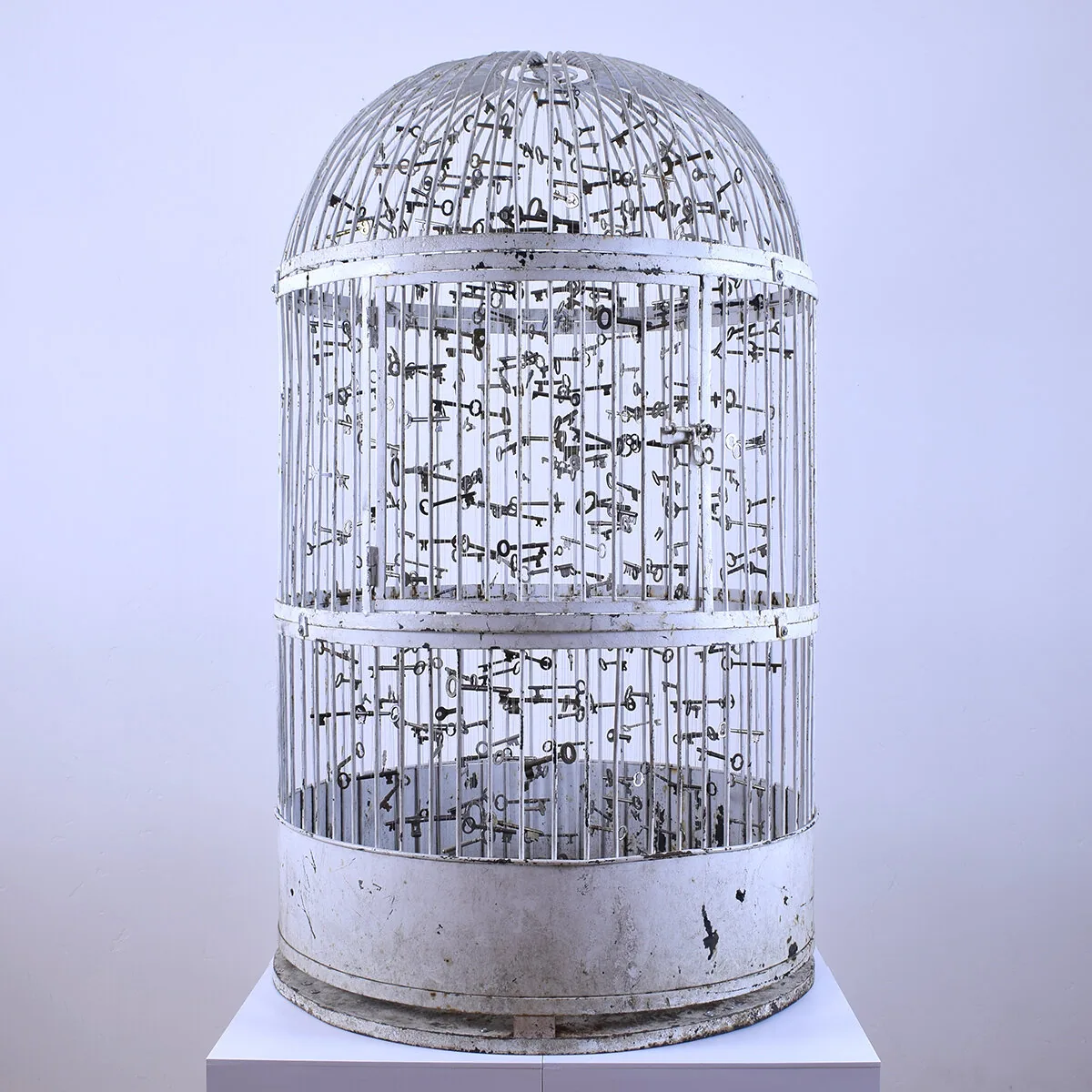
Practice & background
Dan Lythcott-Haims works with overlooked human-made objects. Rust, breakage and age offer colors and textures to examine through photography, sculpture and assemblage.
After studying Product Design at Stanford, he worked in museum exhibits, graphics, products and user experience, including as Creative Director at Pandora Music. A camera received in his forties opened a path toward finding art in existing details.
Wood+Rust pairs found rusty objects with maple supports or frames. Precise presentation draws attention to surfaces formed through weathering rather than entirely controlled design.
The Keys series rearranges keys, cages and lines in space. Cage and Keys (2020) combines a birdcage, keys and fishing line; other works use wood, rusty steel or old parts bins. Repetition and suspension draw attention to enclosure, gaps and weight.
His statement emphasizes repetition, juxtaposition and close focus. Photographs can prompt sculptures, while three-dimensional experiments suggest further images, creating a continuing exchange between media.
Looking at the work
Assemblage, photography and metal patination are central to his practice. Repetition, juxtaposition and close attention reveal wear and aging. Alchemy explores variable patina surfaces, while Wood+Rust presents rusted objects against maple, reframing discarded materials as objects of attention.
IN THE ARTIST’S WORDS
“You're an artist if you make art.”Explore the conversation ↗
Works & practice
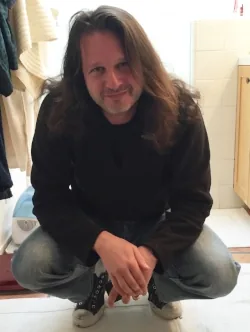
Dan Lythcott-Haims, portrait from the artist’s website.
Dan Lythcott-Haims · View original source ↗A few words to look with
Patina
A surface layer and colour that develop on metal through environmental exposure or treatment. It can register time and become an artistic element, with different metals changing differently.
Found object
An existing object incorporated into art rather than made entirely from raw material. Its former function, wear and history may become part of the work’s meaning.
Abstraction
Organising a work through lines, colours, forms and materials without necessarily depicting recognisable objects. Ask what repeats, contrasts, moves or seems off balance.
Works & further reading
Continue with the artist’s own work and institutional sources.
Artist website ↗- 藝術家官網|Bio ↗
- 藝術家官網|Artist Statement ↗
- 藝術家官網|Sculpture / Assemblage ↗
- 藝術家官網|Work in Progress: NYC ↗
- Dan Lythcott-Haims|Keys 作品與媒材 ↗
Profile based on the sources listed above; the conversation informs the viewing questions and work guides.