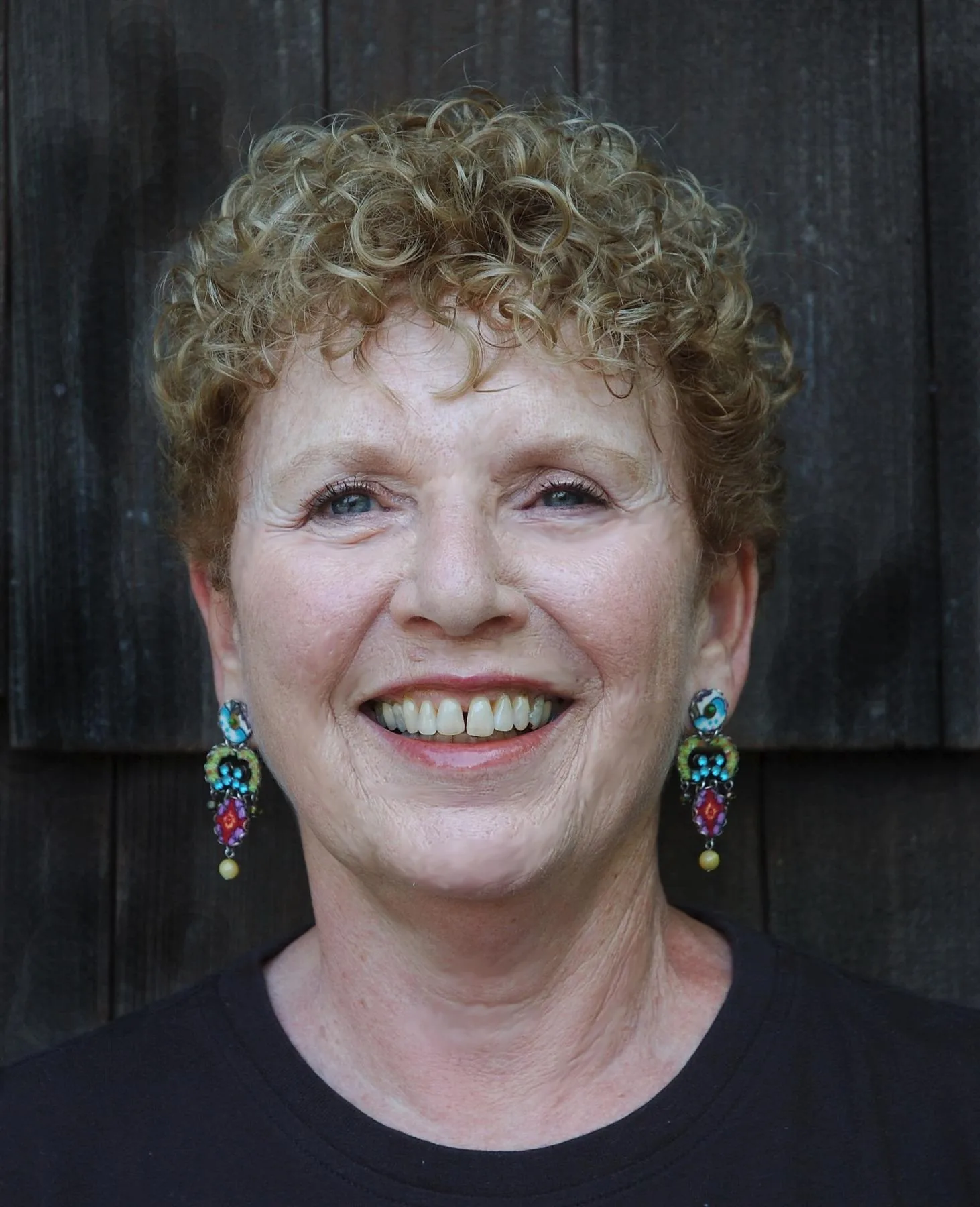
Jerilyn Jurinek
Jerilyn Jurinek · Source: New York Artists Circle · Rights retained by the original rights holders
- Medium
- Oil Paint
- Practice
- Painting
Jerilyn Jurinek paints American historical subjects, and Italian studies in sepia and walnut inks, combining the techniques of classical drawing and painting with the vigor of action painting. Most recently she pairs ess… Full biography
Biography
Jerilyn Jurinek paints American historical subjects, and Italian studies in sepia and walnut inks, combining the techniques of classical drawing and painting with the vigor of action painting. Most recently she pairs essays and drawings made in Italy and combines abstraction, artist friends, and historical spaces.
Jurinek is one of the few contemporary artists who use narrative to uncover the complex and sometimes conflicting relationships between the people she is portraying and the story she is telling. She is currently finishing work on two books: one, Listening to Old Stones (which began as a PowerPoint presentation at the Mulberry Street Branch of the New York Public Library) is a memoir dealing in large part with a pilgrimage to Italy and the impact of Renaissance painting, especially the work of Pontormo and Giorgione, as well as Giotto, each of whom shared in part her sensibility. It was not only the beauty of the painted surface that captivated her but the sheer narrative power of the paintings themselves. The second book, Against All Odds, is focused on the American history paintings of Jurinek and is a work about being a female American artist in our dark and complex time. In it, she talks in-depth about the narrative process and psychology of these specific works by revisiting painting after painting, works that were done over a period of ten years.
She lectures on art, history, and cultural experience in libraries. She is the History Chair of two artist organizations. Ms. Jurinek teaches “Drawing for Theater Designers” at Rutgers, Mason Gross School of the Arts. She taught figure drawing at the Spring Street Studio for 14 years, collage at Cooper Union for 5 years, and Drawing at the New York Public Library occasionally. She teaches with Maestro Francesco Santoro, an internationally known fresco painter, and art historian, at the School of Renaissance Art in NYC. She has painted the apse of St. Adelbert Church in Queens with him in 2017 and other projects of restoration on a frame from Quattrocento Italy to an American portrait from the 19th century.
Jerilyn Jurinek has a BFA from the Art Institute of Chicago. While there, she studied Hans Hofmann's drawing techniques with Elizabeth Rupprecht, daughter of famed Hofmann Assistant Isabel McKinnon, and etching with Vera Berdich. She took academic courses at the University of Chicago. Later, she received her MFA at Columbia University in New York, where she studied with Esteban Vicente, Ronald Bladen, Leon Goldin, and Tony Harrison; there she also studied Art History with Miyeko Murase, Theodore Reiff, and Meyer Shapiro. Her wide range of studies includes courses in anthropology taught by Margaret Mead.
Since 1978 Jerilyn and her husband have lived in a loft in Soho on the street named for Gen. Nathaniel Greene, an officer under General George Washington, a street name that meant more to her as she studied American history.
Artist statement
One is never an artist by one’s self, though artists often work in their studios alone. But underneath the brushstrokes, even if you can’t overtly see their influence, are other artists who are often with them.
For me, Bonnard and Vuillard were my first loves, and Rothko and De Kooning are the artists who inspired me to move into the abstract world. I saw that they still believed in classical skills and cogency of form. More importantly, they believed that art should portray a sense of beauty, even in loneliness.
Reflecting on so much, I strive for abstract impressionism for many reasons. I believe the figure isn’t separate from its environment, memories are blurry, perceptions are often wrong and just because one portrays something in a measured manner doesn’t mean the portrayal is right.
I admire how Morandi believed in reducing things to their essence. By taking such a turn, we have an opportunity to interact fluidly with the people and places we depict, without taking possession of them. In awe of something greater than any artist can describe, I want to keep that respect. I want to see the figures in their world and time, but I don’t desire to complete them. To finish something is to end it. What is hoped for is to keep the inspiration living.
Jerilyn Jurinek, painter
9 July 2021