Results at the Big Three Auction Houses Tell Two Different Stories
Christie's, Sotheby's, and Phillips posted big gains in first-half auction sales, but the recovery was not even.
Original author · Margaret Carrigan
Artnet News / Artnet Pro ·
Reading & commentary · Art Value Lab
Original reading · 01
The art market is approaching its annual summer lull, although with considerably less dread than last year, when half-year sales were at decade lows .
On July 7, Phillips posted a 60 percent increase on its sales for the first half of the year versus the same period in 2025, bringing in a total of $507 million. Sotheby’s and Christie’s are both expected to announce their half-year results next week.
To get a jump on them, I pulled the stats for fine-art sales at each of the Big Three houses from January through June from the Artnet Price Database . Some lots from smaller sales are still being compiled, but June’s London evening sales are included.
Here’s how they stack up.
Recovery at the Top End
Christie’s and Sotheby’s are both trending toward their best or near-best sales totals since 2022, though the number of lots they sold is well below their 2022–23 highs. That means the average prices per lot have climbed sharply this year, driven by high sums for top- tier masterworks.
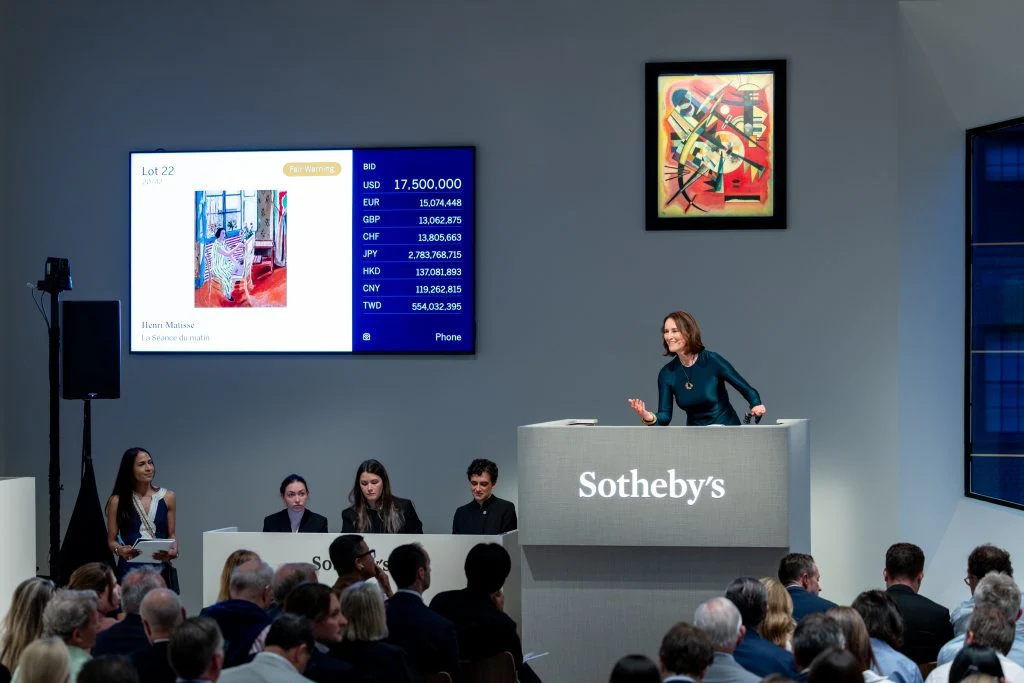
Christie’s is in the lead, with $2.7 billion worth of art sold through June, a solid 88 percent sell-through rate, and an average sale price of $326,900. That’s a 78 percent increase in total sales from the same period last year. The rise is due in no small part to its exceptionally strong marquee sales in New York in May—their best on record, according to the house—which were stuffed with top- tier works from major single-owner collections, like those of publishing magnate S.I. Newhouse , philanthropist Agnes Gund, and dealer Marian Goodman . That week alone brought in $1.4 billion for the house, or more than half its total so far this year.

Original reading · 02
Sotheby’s saw the biggest jump in sales between the first halves of 2025 and 2026: a whopping 88 percent. The house brought in $2.3 billion through June, with an 87.7 percent sell-through rate; the average price per lot reached $350,300. Once again, single- owner collections with trophy-level material are behind the success. The $392.6 million Lewis Collection sale in London last month—the most expensive single-owner collection ever auctioned in Europe—supplemented its $908.6 million New York May sales, which were boosted by dealer Robert Mnuchin ’s holdings.
Finding the Fault Lines
Phillips’s totals reveal some of the fault lines in the current market’s recovery. Known for platforming young, contemporary artists (a segment of the market that has not yet bounced back), the house sold around $260 million worth of art in the first half of 2026, with an 85.3 percent sell-through rate and an average price of $78,500 per lot. Its sales total is a solid 36.4 percent increase over the same period last year but is nowhere near the gains that the houses with access to top-tier 20th-century material posted.
Phillips’s May art auctions fared relatively well, with its modern and contemporary evening auction doubling the prior year’s total. It’s worth noting that it was more than two-thirds guaranteed to sell by value ahead of the night. Christie’s rather disastrous online sale of contemporary works from the Zabludowicz Collection last month shows how works in this category can fare without the benefit of guarantors.
The reliably third-place auction house is savvy, though, and has leaned hard into other categories while contemporary art has cooled. A healthy portion of the $507 million figure that Phillips posted came from a series of remarkable watch auctions, including a $96.3 million Geneva auction in May that saw a mind-boggling 43 records set .
The numbers point to a masterworks recovery, not a market-wide recovery. Christie’s and Sotheby’s are hauling in money via blue- chip estates, but Phillips is proof that everyone else is still working twice as hard for a fraction of the return. The continuing contemporary gallery closures suggest that the primary market isn’t returning to real growth yet, either.
There is growth in other luxury and collectibles markets, however. Heritage Auctions posted its highest mid-year total of $1.4 billion, a rise of 47 percent on the same period in 2025 and nearly triple Phillips’s results. Figures like that may mean we need to expand the Big Three to the Big Four.
Economic indicators suggest that the second half of the year will not look much different, so let’s take the wins where we can get them. The first-half upswing is worth a small sigh of relief after a tough few years. Relish it as the summer slowdown arrives.

Read the argument alongside market data
Source & reading notes
Results at the Big Three Auction Houses Tell Two Different Stories
Margaret Carrigan · Artnet News · 2026-07-11
The English reading retains the supplied article’s wording, with navigation, advertising and recommendations removed. The Chinese edition is an editorial guide, not a parallel translation. Observations refer to the publication date. Art Value Lab commentary does not represent the author’s views. Image rights remain with their respective owners.