Auctions rebound. Why does the market still feel strained?
Buyer’s premiums reveal the pressures behind headline sales
A higher buyer’s premium looks like a change in transaction costs. Margaret Carrigan uses it to ask a broader question: why have trophy sales not restored the vitality felt in galleries and fairs?
Original author · Margaret Carrigan
Artnet News / The Back Room ·
Reading & commentary · Art Value Lab

- Buyers consider total expenditure; higher fees can reduce the hammer price they will bid.
- Auction sales, house revenue and profit are different measures.
- The author argues that trophy results can obscure stagnation in the wider market.
The question behind the article
Carrigan begins with an uneasy contrast in New York’s autumn art season: social activity remains lively, while the energy she and a colleague perceive around exhibitions and fairs feels weaker. This is an observation of a moment, not a survey establishing poor performance at every gallery.
She turns to buyer’s premiums, reviewing fee changes at Christie’s, Sotheby’s, Phillips and Bonhams and interviewing advisers about the economics behind them. Fees become a way to examine the costs of large art businesses.
The larger question concerns the distribution of recovery. Can exceptional prices describe the circumstances of ordinary transactions and businesses? Premiums are the entry point; market structure is the argument.
Who pays the fee—and who bears its effects?
A buyer’s premium is paid to the house on top of the hammer price. Adviser Josh Baer suggests that buyers often have an all-in budget and can respond to higher premiums by lowering their maximum hammer bid. This is an interview view about behaviour, not a universal rule.
A fee formally paid by buyers can therefore affect sellers through bidding. With a fixed budget, a larger premium leaves less room for the hammer price. Seller proceeds then depend on their own fees and agreements. The person paying a charge and the person bearing its economic effects need not be identical.
Scarcity and competition may instead persuade a buyer to increase the budget. Actual effects require evidence about bidding, sales and terms, not a fee schedule alone.
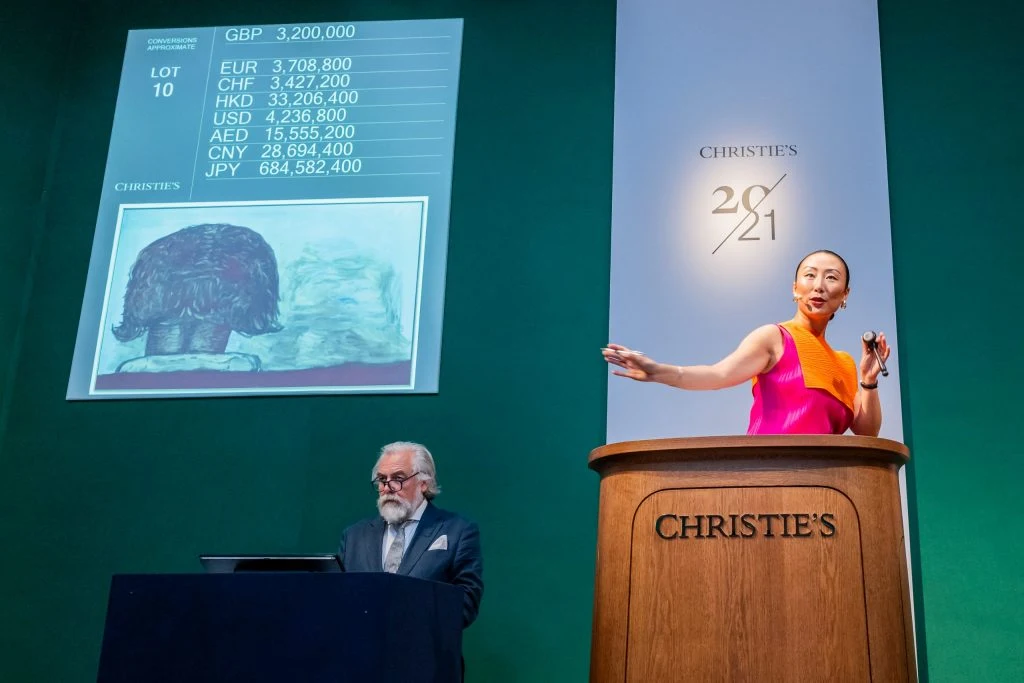
Why strong sales do not guarantee strong profits
Stephanie Armstrong links rising fees to the cost of operating large art businesses, while recognising auctions’ reach and efficiency. She views the growth of advisers and independent channels partly through their lower overheads. This is an industry interpretation, not a complete comparative cost study.
Todd Levin describes exceptionally thin profits and the importance of expensive lots, noting that guarantees can constrain margins. A sale that generates attention does not necessarily produce proportionate retained profit.
Market reports require three distinctions: sales value measures traded objects, house revenue concerns services and fees, and profit depends on costs. An increase in the first cannot show how much businesses, sellers or artists benefit.
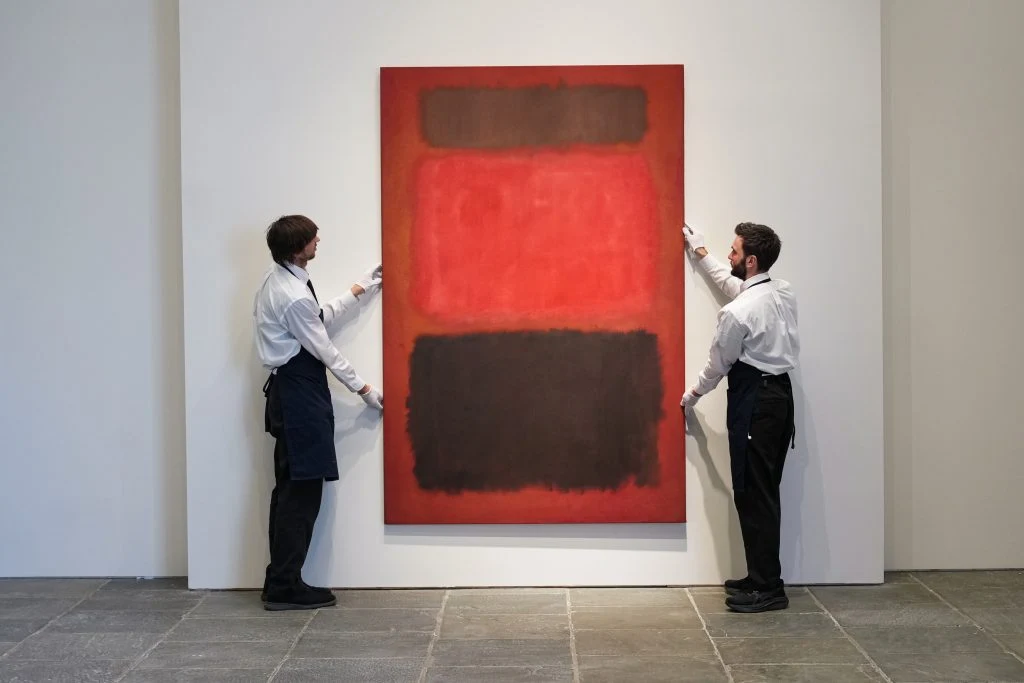
The author’s argument: recovery may be top-heavy
Carrigan connects fees, business costs and the mood of the autumn season. She argues that trophy headlines can obscure low growth elsewhere, leaving some galleries waiting for recovery to reach them. This synthesis is the author’s interpretation; fee increases alone cannot prove it.
Useful follow-up questions concern concentration in major collections, transactions at lower prices, gallery payments, repeat buying and operating costs. They turn a perceived mood into a research agenda.
Art Value Lab: from sales totals to value distribution
This article connects artistic value to transaction structures. A price emerges within fees, services, risk and institutional costs, alongside buyer and seller choices. It is not an isolated number.
We suggest three levels of analysis: whether objects sell, whether participants can sustain their businesses, and whether resources support future creation. Improvement at one level need not reach the others. Auction growth can coexist with gallery pressure without directly describing artist income.
When reading a record price, ask who receives income and who carries risk. This is our editorial question, not an assumption about the profit or arrangements of any particular transaction.
A fixed budget changes the room to bid
Assume a total budget of $128,000, a single premium band and no tax, shipping or other charges:
| Assumed premium | Maximum hammer bid | Buyer’s premium |
|---|---|---|
| 25% | $102,400 | $25,600 |
| 28% | $100,000 | $28,000 |
Total budget ÷ (1 + premium rate) = maximum hammer bid. In this illustration, a three-percentage-point rise reduces the maximum hammer bid by $2,400. Seller proceeds require a separate calculation.
An Art Value Lab teaching example, not any house’s current schedule. Real fees can use marginal bands and additional taxes or terms.A short glossary
Read the argument alongside market data
Source & reading notes
What Can Buyer’s Fees Tell Us About the Market’s Weirdness Right Now?
Margaret Carrigan · Artnet News · 2026-09-24
This guide paraphrases the supplied article and adds definitions, a teaching example and connections to reports. Industry observations and interview views are situated at the publication date; this is not a current fee reference. Editorial analysis and the example are labelled and do not represent the author or interviewees.