Fair-Brokered Museum Prizes Are Multiplying. Here’s Why
Who is gaining what from these partnerships?
Original author · Margaret Carrigan
Artnet News / Artnet Pro ·
Reading & commentary · Art Value Lab
Original reading · 01
Have you also noticed a recent uptick in the number of museum-acquisition prizes at fairs? Have you been wondering what exactly is going on with these deals?
The Armory Show recently announced two new awards—the first in its 30-year history—for its next edition, which opens September 24. The Pérez Art Museum Miami (PAMM) acquisition prize offers $20,000 to support purchases for the museum’s permanent collection and its Green Family Foundation Caribbean Cultural Institute. The Bronx Museum prize provides $15,000 for the institution to acquire a work from the fair’s section for emerging galleries and artists.
Fair acquisition funds aren’t new, of course. Frieze introduced its Outset Foundation –backed fund to support Tate ’s collection back in 2003—but the recent proliferation of funds tied to specific museums, rather than discretionary awards, merits some examination.
A Mutual Exchange?
I did a quick, unscientific tally of major fairs across the U.S., U.K., and Europe—your Art Basels, Friezes, and significant satellite or regional fairs—and counted 31. (We can quibble about who’s on the list and who’s not another time.) Half of these events feature at least one acquisition fund, and four fairs have launched a total five new funds since 2025.
The appeal of hosting a museum-acquisition award is obvious: It lends institutional credibility to a market event and potentially helps attract other high-quality buyers.
“It’s good client service,” Joe Dunning, a culture-focused business development consultant, told me by phone. Fairs need to keep galleries happy if they want to sustain their business model, and “making sure curators from and patrons of major art museums are walking through their aisles can help with that,” he said. With many dealers cutting back on the number of events they go to each year, it’s more important than ever for fairs to make the booth fees worth it.
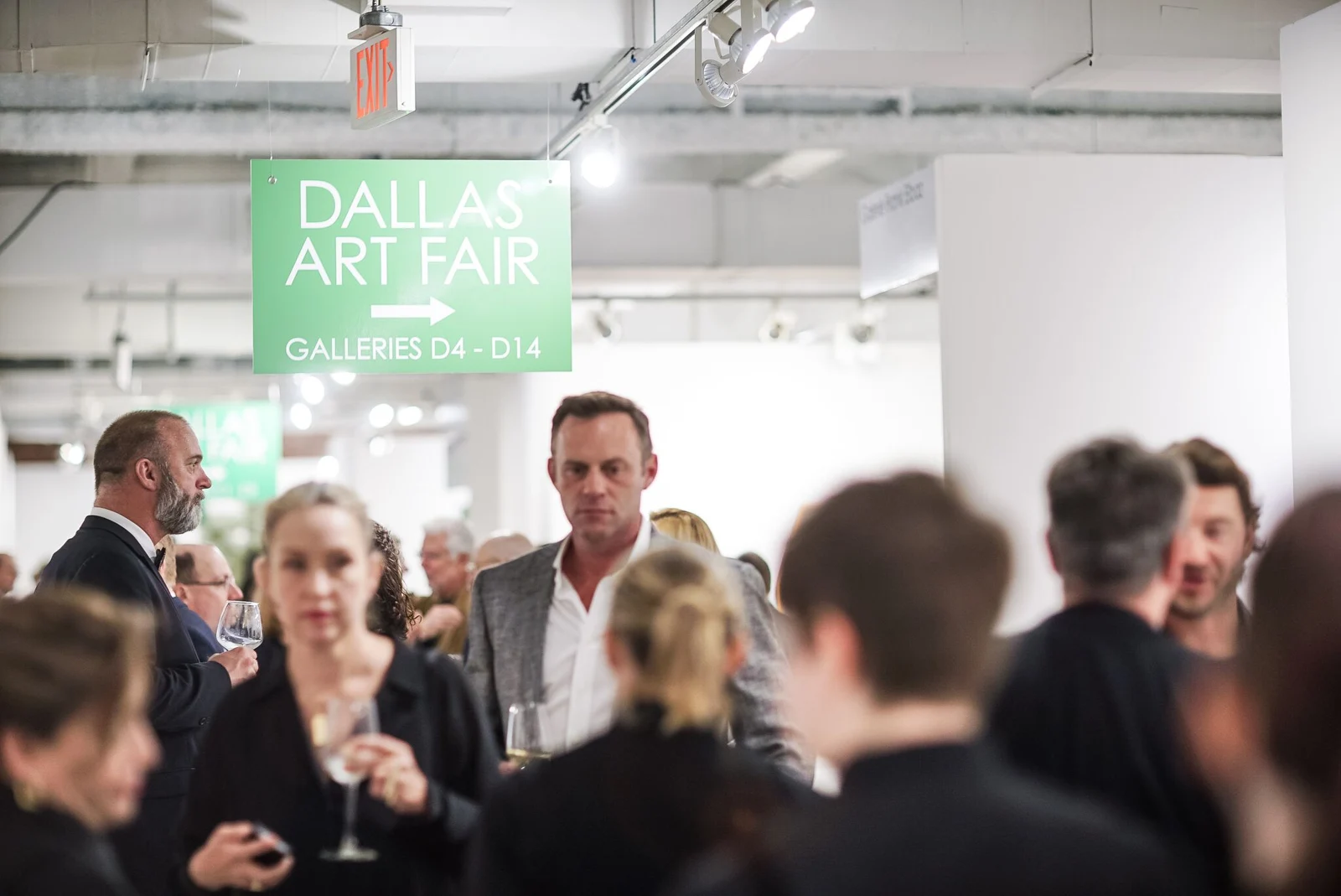
For a museum, the funding allows it to buy works it may not otherwise have had the budget to acquire. Capital for these prizes gets raised in myriad ways. The Dallas Art Fair Foundation pools money from named Dallas-based collectors specifically to fund the Dallas Museum of Art ’s acquisition prize, launched in 2016. Others are backed by one patron, like Frieze L.A. ’s MAC3 fund, founded last year by collectors Jarl and Pamela Mohn. NADA Miami historically used ticket revenue to support its PAMM acquisition fund, and as of last year, a partnership with the Knight Foundation has doubled the prize pot to $20,000. In the case of the Armory’s PAMM prize, it is backed by the museum’s preexisting Diane Moss Director’s Discretionary Fund .
But as philanthropy advisor Leslie Ramos told me, the annual spend from these funds is generally under $100,000—not enough to move the needle on a collecting strategy.
“I’m not sure how significant their purchasing power actually is,” Ramos said in an email, “particularly because they tend to be attached to major fairs, where price points can be relatively high, rather than smaller fairs where the same amount of money might go considerably further.”
Original reading · 02
In fairness, some of these funds, like the Armory’s Bronx Museum prize, are earmarked for works by emerging artists, which do sell at lower prices, but that is not the norm.
The Independence Question
One potential concern around fair-brokered acquisition funds is curatorial autonomy. Since the introduction of the Frieze Tate Fund, critics have fretted that market demand will be falsely equated with artistic quality, unduly creating an uncritical, commercialized canon.
Whether this bears out in practice is another matter. A 2006 London Times article feigned incredulity over Tate’s acquisitions at Frieze that year, which included works by hardcore conceptual artists like David Lamelas and stanley brouwn — hardly market darlings. (The article also reminded me that Frieze used to be edgy.) That was 20 years ago, though, and since then the art market has nearly doubled in size , and some would argue that fair offerings have become safer and more commercially minded.
Two decades later, concerns about institutional independence remain, and the financial precarity that underpins those concerns has worsened. The critic and historian Tyler Green told me, “In the U.S., where there is scant public funding for art museums, and where relatively few art museums have endowments large enough to provide them with a measure of independence, institutions have often been willing to forgo integrity and the authority that derives from it to cozy up to wealth or immediately available cash. While it would be easy to criticize this practice, it’s important to recognize it is a symptom of a greater issue.”
José Carlos Diaz, senior director of curatorial affairs and chief curator at PAMM, was clear that the same standards apply whenever the museum makes a purchase. “Art fair acquisitions may move more quickly because of timing,” he said, “but they receive the same careful consideration and go through the appropriate approval process.” He added that fair purchases tend to net more media attention for the museum than a typical acquisition.
Ramos noted that such prizes are also “partly philanthropic and partly a form of marketing” for the fairs. The chosen institutions tend to be ones the fair already has a civic or donor tie to—proof, in effect, that the fair is embedded in its local art ecosystem, not just extracting from it.
“Each fair holds a unique position within their cities and our acquisitions respond and align accordingly,” said Christine Messineo , director of Americas at Frieze, which owns the Armory Show. “We know that fairs are a point of convening where museums, curators, trustees, and galleries come together. Our efforts more formally characterize these relationships to further strengthen the markets across the regions our fairs represent.”
As these funds multiply—and as fairs increasingly target specific institutions—they’re becoming less a gesture of goodwill and more a formal transaction: Fairs buy institutional cachet, and museums get a little extra budget. It’s a trade that works for everyone in the short term. The longer-term question is what it costs the art.
Correction: This article was amended to reflect that the Diane Moss Director’s Discretionary Fund supports the Armory Show’s PAMM Museum Acquisition Prize; it previously stated that the director’s fund supported the Bronx Museum prize due to an error in press materials.
Read the argument alongside market data
Source & reading notes
Fair-Brokered Museum Prizes Are Multiplying. Here’s Why
Margaret Carrigan · Artnet News · 2026-09-10
The English reading retains the supplied article’s wording, with navigation, advertising and recommendations removed. The Chinese edition is an editorial guide, not a parallel translation. Observations refer to the publication date. Art Value Lab commentary does not represent the author’s views. Image rights remain with their respective owners.