Museums and public funding: why stable budgets can still mean less capacity
Reading financial pressure, institutional missions and public access across countries and museums
This global study asks who finances the expanding responsibilities of museums. The reading separates samples, funding definitions, regional contexts, alternative income, labour and governance, connecting financial strategies to public purpose.
Original research · IRAPFM · UQAM · ICOM-IMREC project · 2025
Reading & commentary · Art Value Lab
 Museum and Public Funding — Decrease in Public Funding? A Worldwide Answer from Museums
- Flat nominal budgets can conceal inflation, energy costs and added responsibilities.
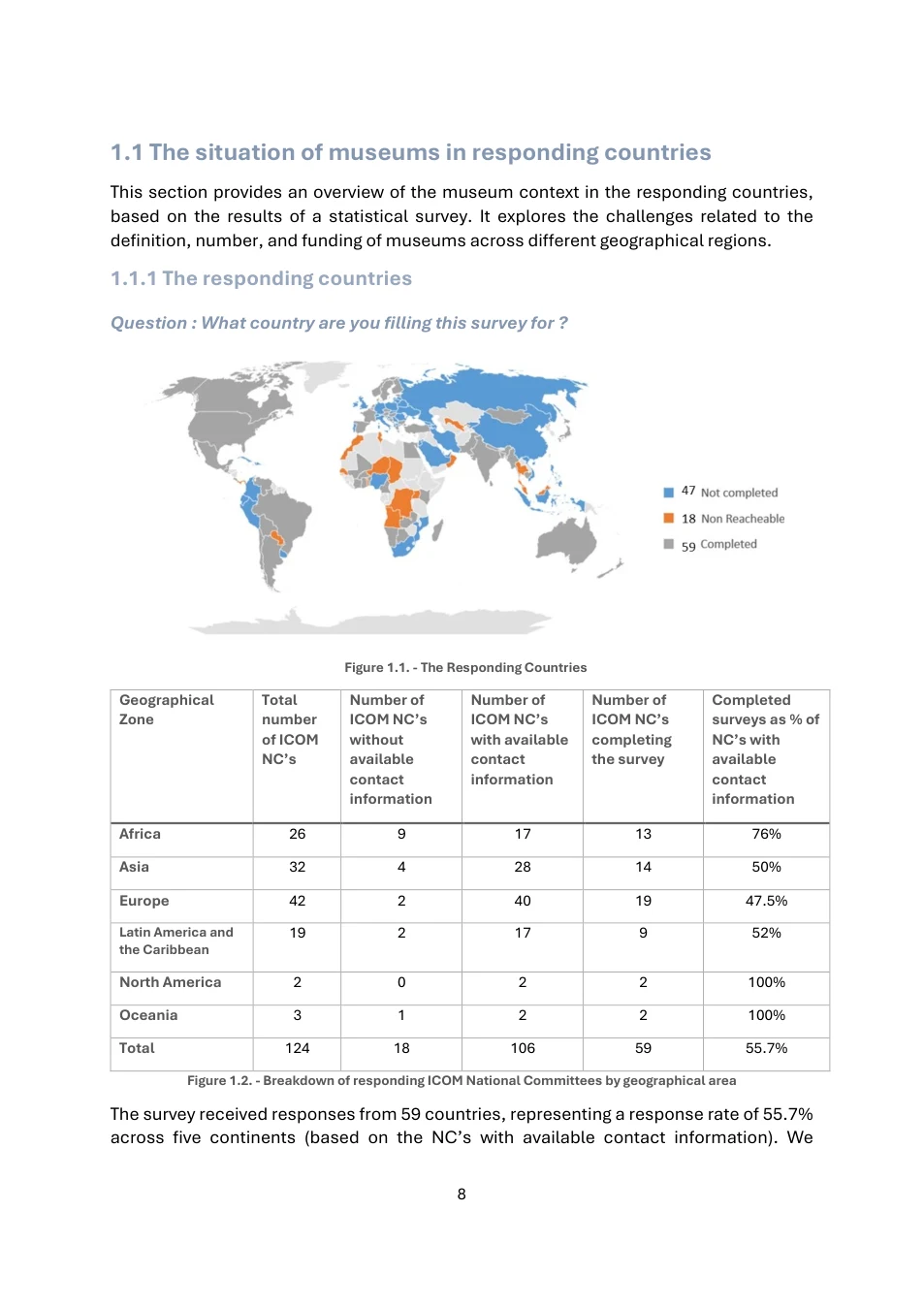
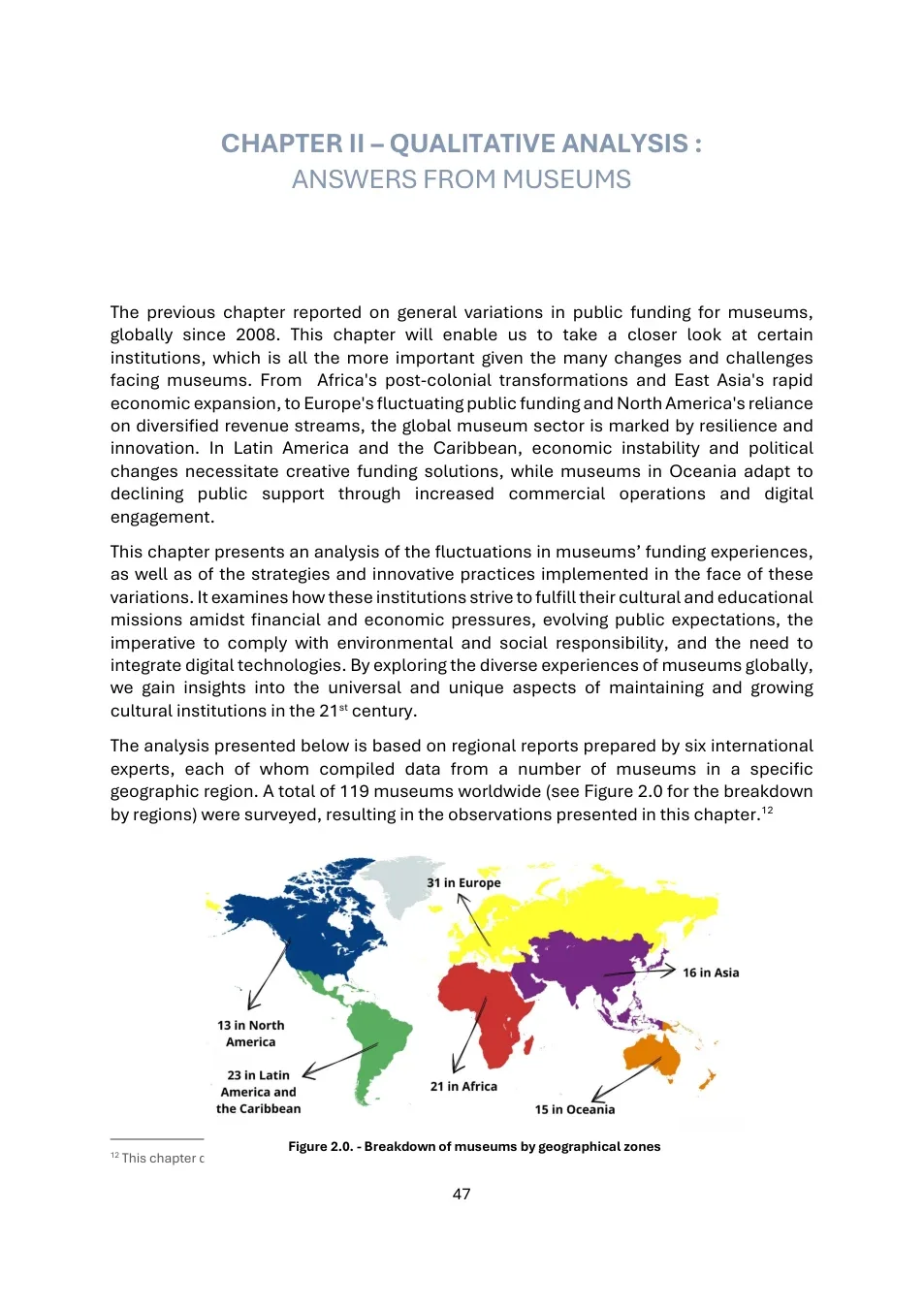
- The 59 national responses and 119 museum cases are different samples, not a global census.
- Earned income and digital services need investment and can create new inequalities.
Figures refer to the source samples and survey period; expectations are not realised outcomes.
If exhibitions attract sponsors but conservation, staffing and education remain underfunded, has the museum become more sustainable?
Two layers of evidence, not a census
The study combines national-committee reporting with expert-selected museum cases. National responses describe institutional contexts; museum responses describe adaptations. They cannot be pooled or treated as audited accounts for all museums.
The 55.7% response rate uses 106 contactable committees, not all 124 targeted. Missing contact information and inconsistent definitions are themselves evidence of uneven information infrastructure.
Public funding is more than a grant
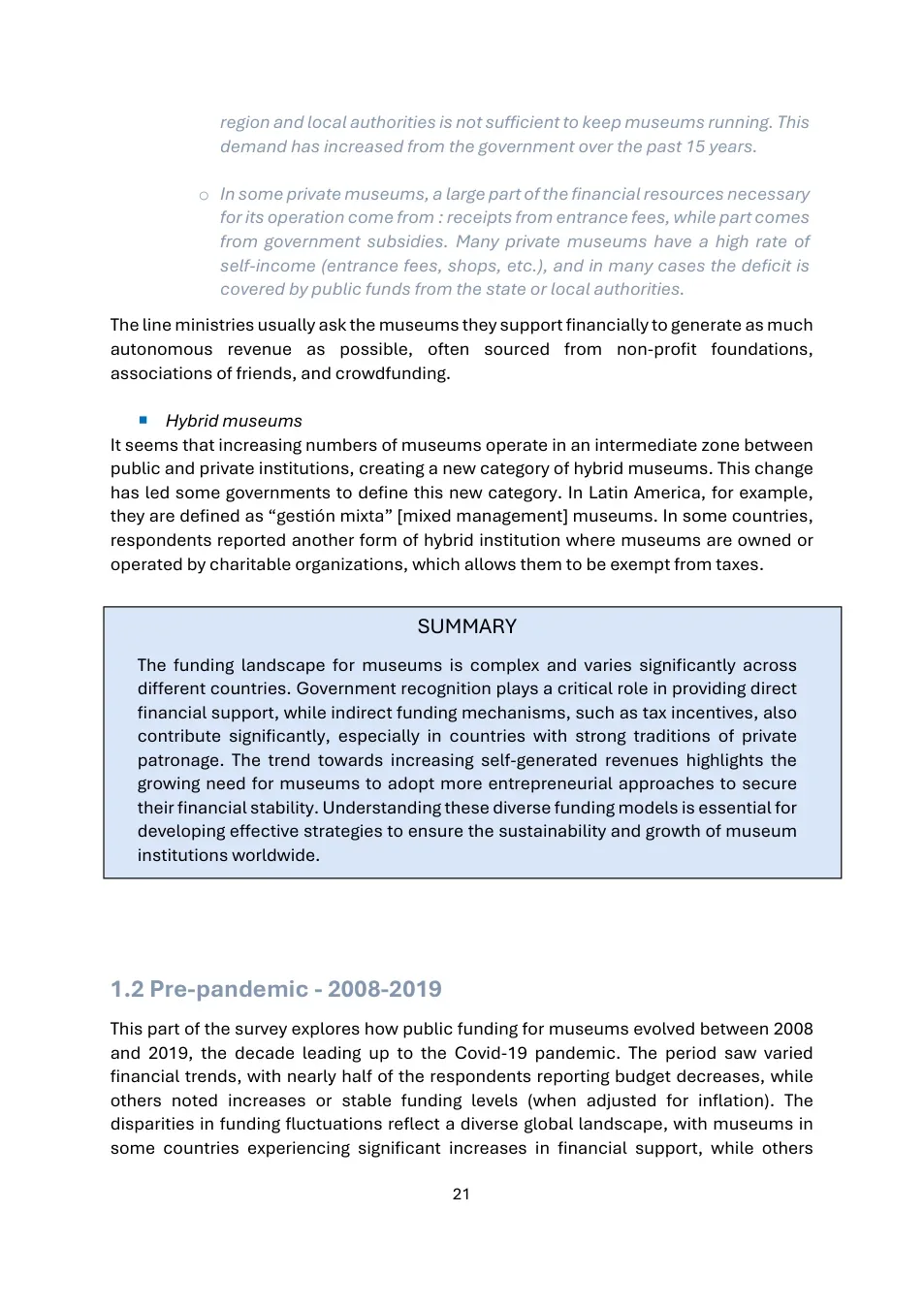
The report distinguishes market income, public subsidy and donations. Support can come from several government levels and include operating, project and indirect assistance. Public and private ownership do not map neatly onto funding sources.
Financial resilience also depends on predictability, restrictions, timing and decision-making authority. A diversified list of donors does not establish a dependable operating budget.
Flat budgets can reduce real capacity
Financial pressure includes more than explicit cuts. Inflation, insurance, utilities and maintenance reduce what unchanged funds can purchase, while cybersecurity, inclusion and sustainability add responsibilities.
Deferring projects and training may protect immediate operations but weaken future capabilities. Savings often cover essentials rather than creating capacity for new missions.
Source report pages · 88–95Regional differences matter
Regional chapters cover Africa, East Asia, Europe, Latin America and the Caribbean, North America and Oceania. They describe different public-funding trajectories and combinations of earned, donated and digital income.
These are contextual findings from cases and expert analysis, not uniform national rules. Large institutions and small local museums have different audiences, staffing and fundraising capacity; a strategy cannot be transferred without examining those conditions.
Earned income and transferred risk
Memberships, retail, venue hire, licensing, partnerships and accommodation can supplement income. Cases include an attached hotel and digital education services.
Selling property is a one-off response rather than recurring income. Commercial activities face demand and operating risks. Requiring more self-financing can transfer uncertainty from government to institutions rather than resolve it.
Source report pages · 86–93Digital services require continuing support
Online exhibitions, virtual tours and education can extend access and create revenue opportunities. They also require maintenance, expertise, security and accessible content.
Larger museums can invest more readily, while smaller institutions face difficult trade-offs. Emerging formats mentioned in the report should not be read as proven, universally viable revenue models.
Source report pages · 87、91–92、106Volunteers do not erase labour costs
Volunteers contribute essential services but need training, management and support. Dependence on unpaid work can conceal true costs and exclude people unable to work without pay.
Expanding responsibilities alongside constrained salaries and development budgets risk burnout and professional departures. Remaining open is not the same as sustaining the people who make the institution function.
Pricing, partnerships and public trust
Higher admission fees may raise revenue while limiting access. Memberships, free days and differentiated pricing have different consequences, including for Indigenous communities accessing their own cultural heritage.
Partnerships need scrutiny of funders, conditions and influence. Clear ethics policies, financial disclosure and accountability help distinguish obtaining money from financing the museum’s mission.
Source report pages · 98–101Shared responsibilities for action
The calls for action address museums, national committees and associations, ICOM, governments and civil society. They combine strategic planning, training, monitoring, research, transparent multi-year support and public participation.
These are recommendations rather than enacted policies. They distribute responsibility beyond museum management and treat continuing operations and new duties as matters of sustained public commitment.
Art Value Lab: match responsibilities to resources
An editorial application is to map conservation, research, education and community work against staffing, recurring cost, restrictions and funding duration. Separate project receipts from flexible operating support.
Consider lower attendance income, the end of a major sponsorship and flat grants amid rising costs. This is a planning framework, not a forecast supplied by the report.
Source report pages · 90–107Methodology & source
Based on the supplied 165-page PDF. Citations use printed report pages; printed page 1 is PDF page 12. The quantitative survey targeted 124 national committees, of which 106 were contactable and 59 responded: the stated 55.7% uses 106 as its denominator. Fieldwork ran from June 2023 to April 2024, comparing 2008–19 with 2021–22. Regional experts selected museum cases; 119 responses were collected from August 2023 to May 2024. Definitions, uneven representation and incomplete financial series limit generalisation. Government-ministry accounts were not compiled. The report expresses IRAPFM views, not necessarily those of ICOM-IMREC, which initiated, managed and funded the project. This guide covers the main findings and action framework rather than transcribing questionnaires and bibliographies.
Museum and Public Funding — Decrease in Public Funding? A Worldwide Answer from Museums
IRAPFM · UQAM · ICOM-IMREC project · 2025