The Venice Biennale Is High Stakes. James Cohan Gallery Is All In
With three artists in the central exhibition, the mid-sized firm faces major opportunities—and pressures.
Original author · Katya Kazakina
Artnet News / Artnet Pro ·
Reading & commentary · Art Value Lab
Original reading · 01
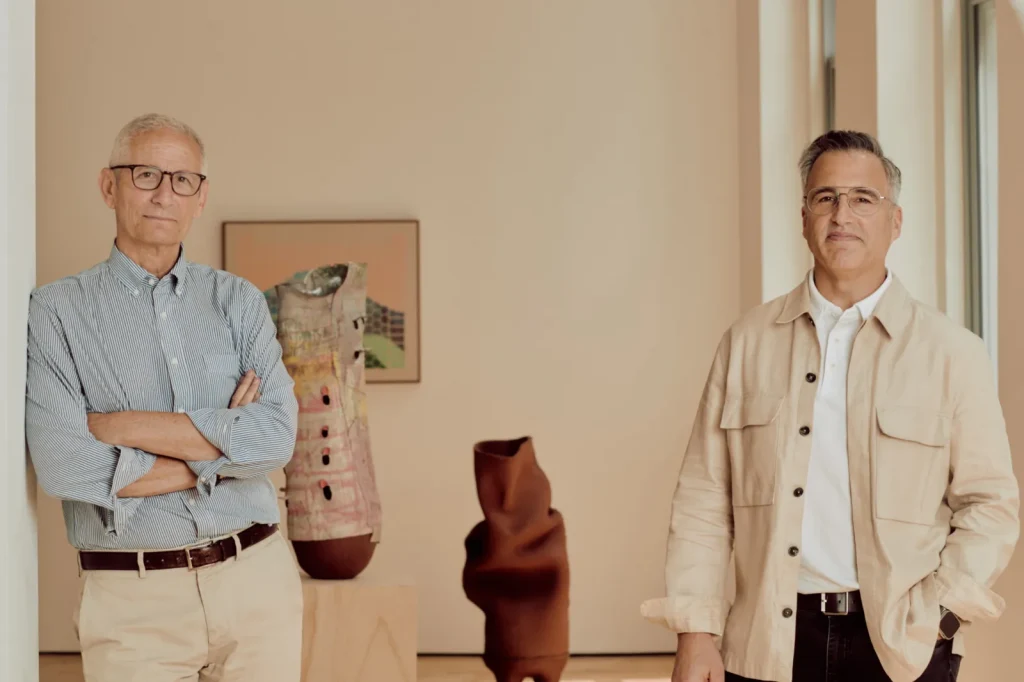
For dealer James Cohan , this year’s Venice Biennale is both a breakthrough moment and a stress test.
The respected player in the market’s middle tier represents four artists in the 61st International Art Exhibition, which opens to the public on Saturday, after four days of previews.
Three of them— Ranti Bam , Tuan Andrew Nguyen , and Kennedy Yanko —are showing their own work. The fourth, Yinka Shonibare , is the founder of Guest Artists Space Foundation (G.A.S.), a Nigerian non-profit residency that is among the 110 artists and collectives invited by the late curator Koyo Kouoh to participate in the biennale’s central exhibition, “In Minor Keys.”
“We’re thrilled to have our artists represented,” said Cohan, who founded his New York gallery with his wife Jane in 1999. “It’s a whole set of eyes that go to Venice that don’t go to fairs in the U.S. or exhibitions like the Whitney Biennial .”
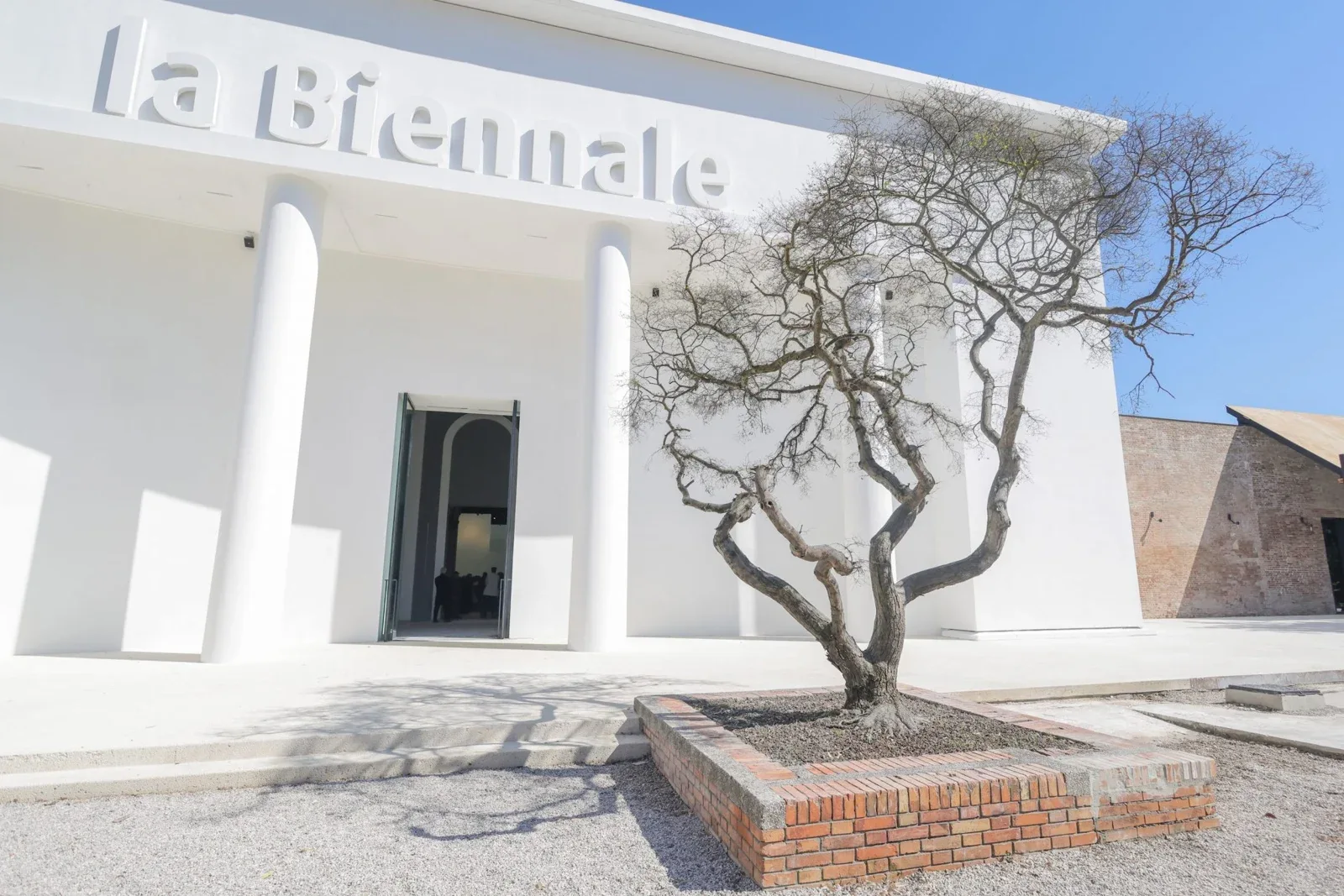
The 131-year-old Venice Biennale is considered the pinnacle of international exhibitions, a key barometer of geopolitical and cultural shifts, a place where artists get canonized. Being there catapults artists and their galleries to the epicenter of the global art conversation, confirming their relevance and creating opportunities for new projects, publicity, and acquisitions by collectors and institutions.
The central exhibition, “In Minor Keys,” is La Biennale’s real seat of power. Unlike national pavilions, which are shaped by domestic politics, or collateral shows, which often have marketing agendas, it reflects the singular vision of its curator, who aims to define what matters in contemporary art right now. Tragically, Kouoh died last year at 57, but she left behind a team to carry out her vision.
Having so many artists on view places the mid-sized James Cohan Gallery in a position typically held by the industry’s biggest players. But none of the four mega-galleries— Gagosian , Pace , David Zwirner , and Hauser & Wirth —have as many artists in the central exhibition this year as Cohan. Some have none.
Such a moment can expose a gallery’s financial limits. Biennale-scale production means major upfront costs—shipping, fabrication, travel, events—at a time when many mid-sized galleries are already under strain. Cohan scaled back last year by closing one of its three spaces in Manhattan.
Still, the gallery is going all-in for Venice. “It’s our job to give our artist the biggest and most compelling platforms to be seen,” Cohan said.
In the case of Nguyen, 50, a multi-media Vietnamese artist with surging acclaim, that meant supporting the production of his hour- long film about Vietnamese Senegalese outlaw Bouba Chinois , which will be screened on two massive screens in the Arsenale, one of the main exhibition’s two venues.

Original reading · 02
The gallery helped secure funding, arrange his travels, and handle logistics, Nguyen said. “Making sure I am in places where I need to be, making sure the artwork arrives on time,” he said. “They do all the publicity and the press. Without the gallery, a lot of this wouldn’t be possible. I love them.”
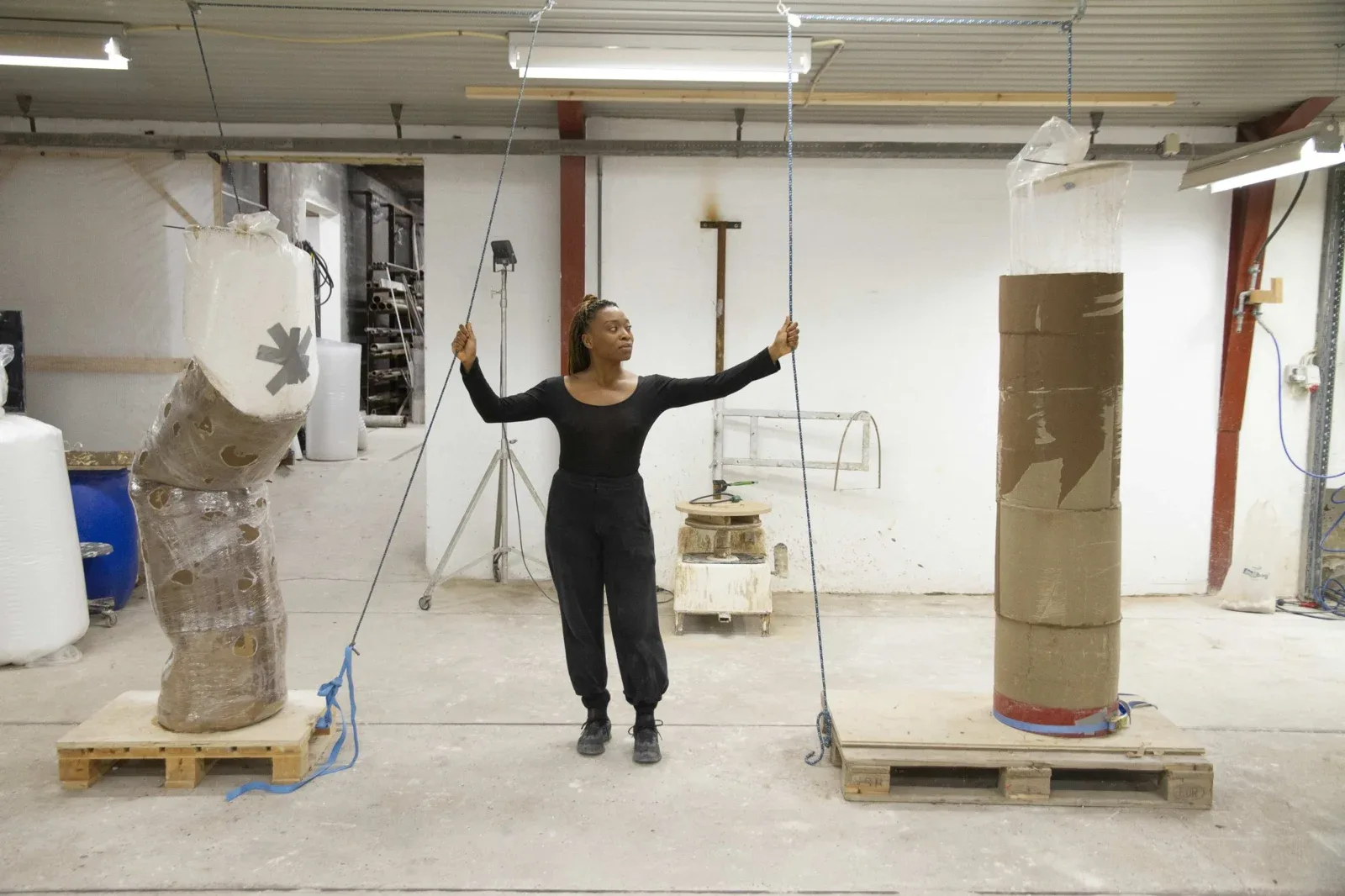
Paris-based Bam, 43, who created five 6-foot-tall ceramic heaths to present in Venice, said that the gallery has been “absolutely incredible, holding down the fort. They manage all the admin. With Venice, they got the flight, booked the hotel, sorted out the timing.”
Cohan is hosting social events, including a celebratory luncheon at the St. Regis Hotel in partnership with the Salon 94 and Esther Schipper galleries, which co-represent some artists with Cohan. A team of ace publicists was hired to promote the events.
Patrons of the artists are also pitching in. Collector Pamela Joyner is throwing a dinner party for Yanko, who created a 20-foot-tall sculpture, one of her largest to date, for Venice. Stuart Parr and Özlem Önal are organizing a reception for the 37-year-old rising star in a palazzo overlooking the Grand Canal.
Drumming up sales is also a key part of the week. With so much focus on the curatorial aspect of the show, it’s easy to forget that Venice Biennale used to be unapologetically commercial. Until 1970, the biennale even operated a formal sales office. The print catalogs listed prices, and the City of Venice took a commission on the transactions.
In 1968, this led to protests by artists and students, who carried slogans like “They Sell Art Like Coca-Cola.” Since then, La Biennale has worked hard to stress its curatorial bona fides by appointing independent curators and tapping jurors to award prizes, occasionally stirring controversy.
Today, the transactions are less visible—but no less crucial. The biennale is “an interesting confluence of the curatorial and commercial,” Cohan said.
All the works by the artists can be purchased, he said, and the gallery is in conversations with collectors and curators. Bam’s ceramic pieces are $75,000, and some have already sold. Nguyen’s film comes in an edition of six, priced at $150,000 each. Yanko’s 20-foot sculpture is $500,000.
Unlike an art fair, the biennale’s curatorial voice presents the works within a particular narrative. With “In Minor Keys,” Kouoh was looking at quieter stories, communal spaces, and intimacy, David Norr , a partner and co-owner at James Cohan Gallery, told me the other day. “This idea of deep listening rather than speaking loudly, that’s where you hear the minor keys.”
“People are hungry for the context and a story, for stringing ideas together,” Norr continued. “The market, left to its own devices, doesn’t do that. Art fairs don’t do that. People are just chasing objects.”

Read the argument alongside market data
Source & reading notes
The Venice Biennale Is High Stakes. James Cohan Gallery Is All In
Katya Kazakina · Artnet News · 2026-05-04
The English reading retains the supplied article’s wording, with navigation, advertising and recommendations removed. The Chinese edition is an editorial guide, not a parallel translation. Observations refer to the publication date. Art Value Lab commentary does not represent the author’s views. Image rights remain with their respective owners.