Pace Gallery Downsizes, Cutting Artists and Staff
'The current gallery model isn’t only broken, it’s unfixable,' its CEO, Marc Glimcher, said.
Original author · Margaret Carrigan
Artnet News / Artnet Pro ·
Reading & commentary · Art Value Lab
Original reading · 01
The high-flying Pace Gallery , one of the cornerstones of today’s art market, is slashing some 50 artists and estates from its roster of more than 130 names, the New York Times reported late on Wednesday night. It is also laying off about 50 of its 250 staffers, according to the paper.
“The art world has changed dramatically over the past decade, and the current gallery model isn’t only broken, it’s unfixable,” Pace’s CEO, Marc Glimcher , said in a statement to press. “Every gallery is currently making temporary fixes and compromises to prop up a system that no longer works.”
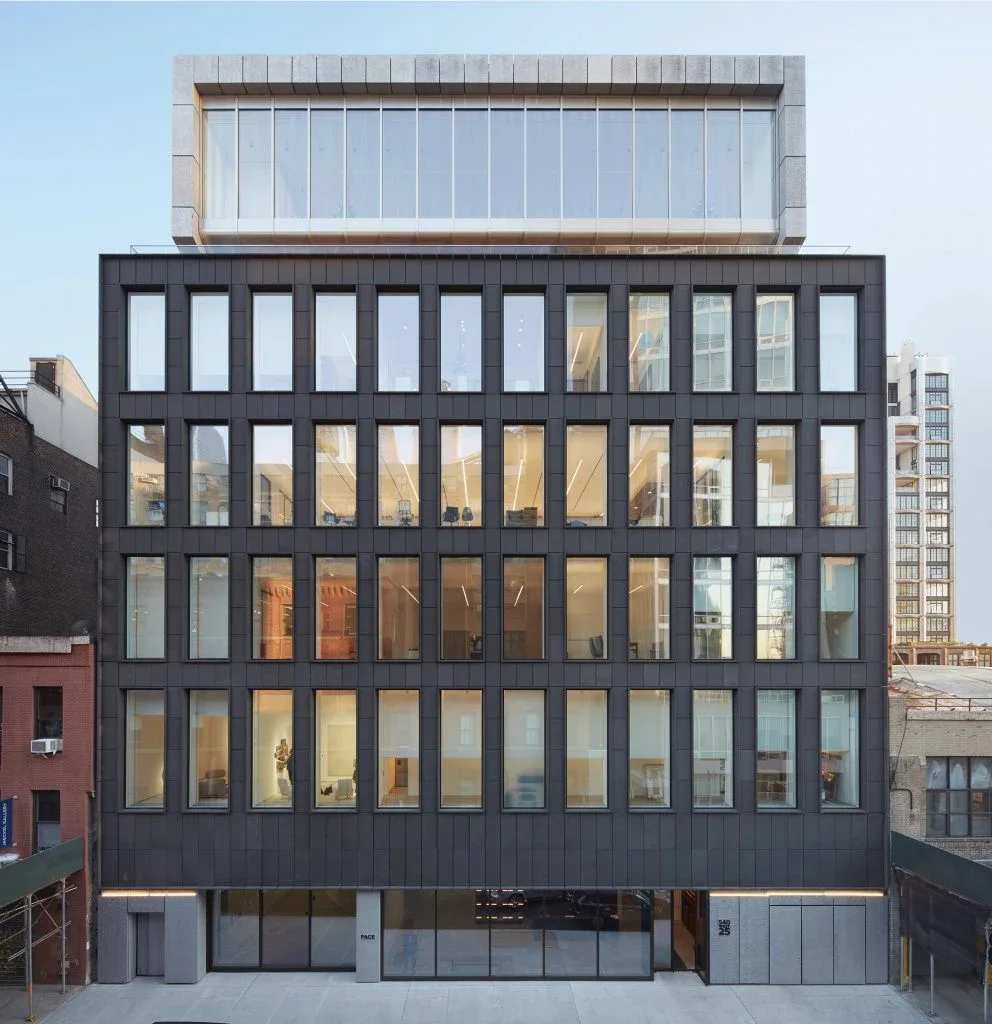
The move comes following a prolonged downturn in the market for contemporary art and speculation in the industry about Pace’s financial health. In 2019, Artnet News reported that the rent on its towering flagship gallery in Manhattan’s West Chelsea neighborhood was more than $8 million per year.
In his statement, Glimcher, a son of founder Arne Glimcher , framed the gallery’s move as a pivot away from the “mega gallery” model of recent decades. That approach “requires an overlay of management that diverts resources and attention from the heart of our business,” he said. “It has also resulted in rosters that are so large that it’s impossible to give all of the artists the level of support that they deserve.”
Pace said that it would focus on around 80 artists going forward. Names that have disappeared from its online roster since early this year include Keith Coventry , Glenn Kaino (whom the Times identified as a cut), teamLab , and John Gerrard . In recent months, Pace brought aboard Anicka Yi and the estate of Constantin Brancusi , who both remain on its website.
“We’re going back to the future, connecting younger artists to their spiritual fathers and mothers and building upon our 66-year history,” Glimcher said.
Pace, which was established in 1960 in Boston, has spaces in New York, Los Angeles, London, Geneva, Berlin, Seoul, and Tokyo. It took part in well more than a dozen art fairs last year, according to its website .
Original reading · 02
Earlier on Wednesday, Pace announced the details of its lineup for Art Basel in Switzerland, which opens to invited guests on June 16. Its booth will include works by longtime Pace artists like Lynda Benglis , Alexander Calder , Agnes Martin , and Louise Nevelson .
Of Glimcher’s latest business decision, advisor and former Christie’s president Jussi Pylkkanen said it was a “smart move,” adding that the bigger the business, the greater the need to adapt. “Pace has a great history of being very agile, seizing new opportunities and making brave decisions,” he said. “The landscape of the art world has changed radically since Covid and many businesses will need to change their models to suit this new environment.”
In recent years, Pace has frequently invested in new projects and spaces, with mixed results. Last year, Pace launched a shared space in Berlin with Galerie Judin and partnered with Di Donna Galleries and auction executive David Schrader to start a secondary market firm, called Pace Di Donna Schrader, both of which will continue, a spokesperson confirmed. Since 2022, Pace has shuttered both its Hong Kong and Palo Alto, California, spaces while also distancing itself from the experiential art centers known as Superblue , an initiative reportedly mired in cost overruns . The gallery also pursued, but ultimately abandoned, a joint venture with Sotheby’s.
Stephanie Armstrong of the advisory firm Beaumont Nathan said that the choice to scale back takes courage. “For the last 20 years, the art market has been driven by a ‘more is more’ mentality, but I think we’re starting to see a shift,” she said, noting that art firms are increasingly favoring lean, flexible models that are driven more by the quality of relationships than by volume. “I think the future success of our industry depends on it.”
Meanwhile, around 20 percent of staff across all locations are impacted by the cuts. A former Pace staffer, Hannah Root , said she was sorry to see friends and former colleagues affected. “We can all understand why Pace and the art world in general have to recalibrate in this environment,” she said. “I’m optimistic that Pace’s recognition of a need for change will encourage other galleries, institutions, and individuals to start thinking about the art world they want to be in. I’m looking forward to seeing how we collectively shape a more sustainable path forward.”
While Pace did not provide a list of its departing artists, Artnet compared the number of artists noted on the gallery’s website in February 2026 with the those listed as of Thursday, June 4; 30 names had been removed (although some of the attrition may not be directly related to the downsize). Further roster adjustments may follow the announcement. As of publishing time, the following artists were no longer listed:
Richard Avedon William Christenberry Keith Coventry David Goldblatt Paul Graham Kevin Francis Gray Hai Bo Hong Hao Virginia Jaramillo JR Glenn Kaino Nina Katchadourian Acaye Kerunen Grada Kilomba Josef Koudelka Liu Jianhua Damian Loeb Rafael Lozano-Hemmer Hermann Nitsch Paolo Roversi Robert Rauschenberg Keith Sonnier Sui Jianguo Jiro Takamatsu teamLab Tim Eitel JoAnn Verburg Brent Wadden Xiao Yu john gerrard
Read the argument alongside market data
Source & reading notes
Pace Gallery Downsizes, Cutting Artists and Staff
Margaret Carrigan · Artnet News · 2026-06-04
The English reading retains the supplied article’s wording, with navigation, advertising and recommendations removed. The Chinese edition is an editorial guide, not a parallel translation. Observations refer to the publication date. Art Value Lab commentary does not represent the author’s views. Image rights remain with their respective owners.