Christie’s London Sale Confirms Growing Appetite for South Asian Art
The artists Abanindranath Tagore and Kattingeri Krishna Hebbar both achieved auction records.
Original author · Richard Whiddington
Artnet News / Artnet Pro ·
Reading & commentary · Art Value Lab
The article
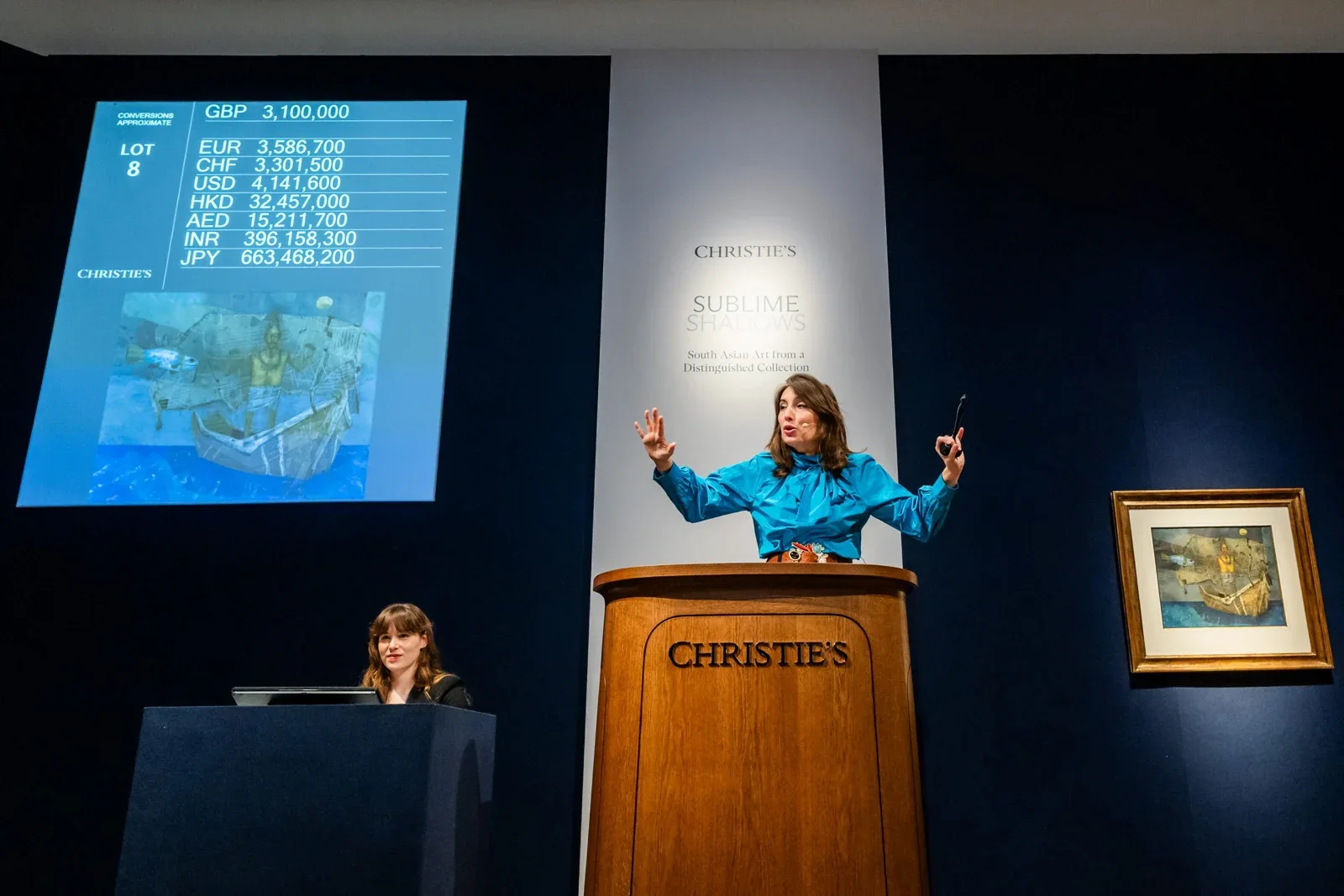
In its first London sale of South Asian modern and contemporary art in seven years, Christie’s achieved £18.9 million ($23.9 million). All of the 93 lots, which came from a single private collection, sold above their presale estimates, resulting in the most successful sale of its kind that Christie’s has staged in the British capital.
The collection had been formed across the 1990s and 2000s and included statement works from some of the pioneers of modern South Asian visual culture. “The sale reflects something deeper than strong material,” Varun Kaji , a prominent South Asian art advisor, said over email. “This collection was assembled with real conviction, and the market responded accordingly.”
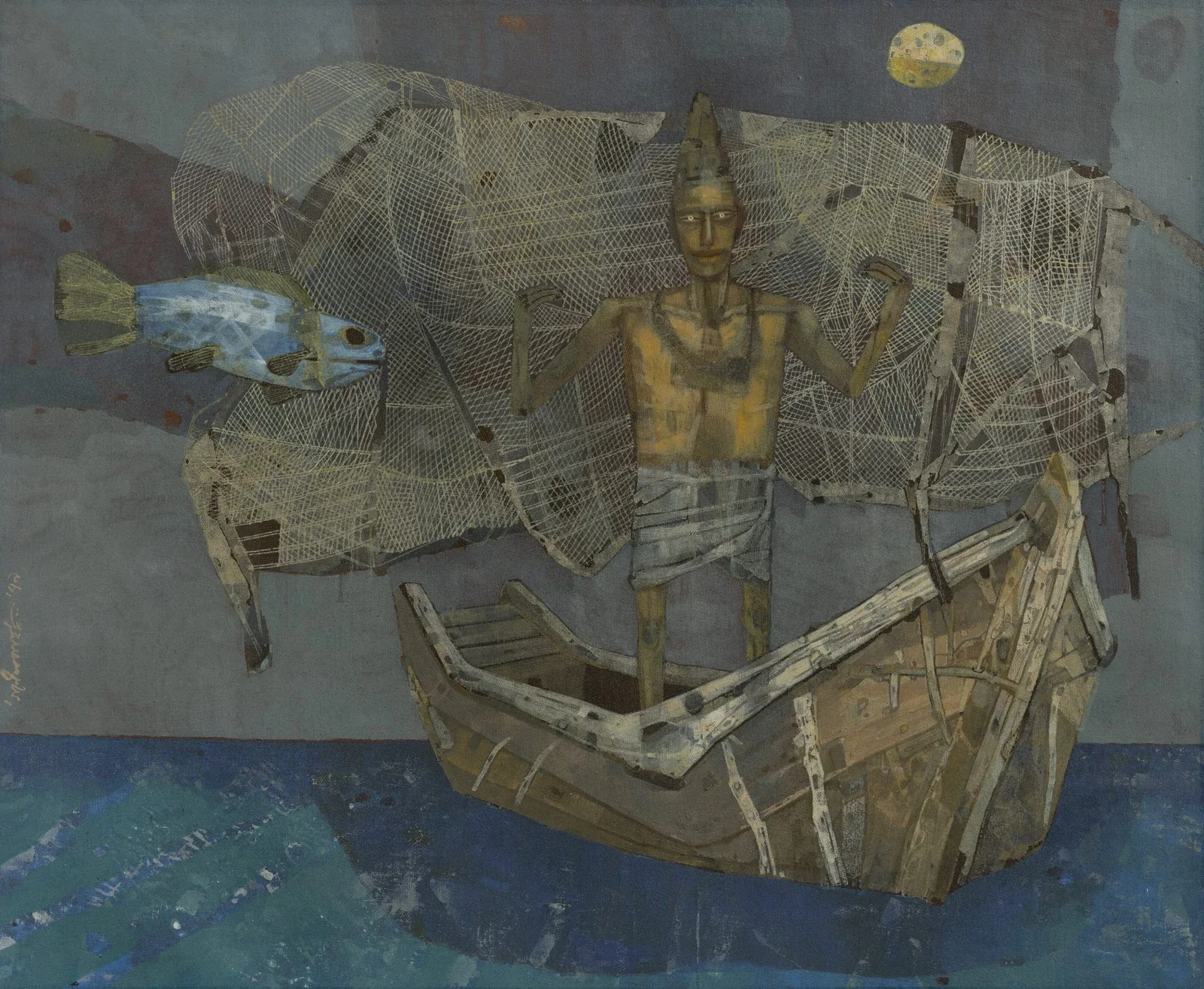
The sale was anchored by three atmospheric works by Ganesh Pyne , the Kolkata-born painter known for his dark, surrealist works that pull from Bengali folklore and mythology. The Fisherman (1979) led the way. The tempera on canvas of the gaunt title character encircled by a patchwork net sold for £3.8 million ($4.9 million), 10 times its high estimate. Under the Red Cloud (1970), which depicts an ambitious figure clambering out of a river and towards the elongated flame emanating from a lamp, realized £2.4 million ($3 million), eight times its high estimate. Woman the Serpent (1975), which likely depicts Manasha , a goddess of snakes who was worshipped in Bengal, also sold for £2.4 million. The prices are proof, Kaji said, that blue-chip Indian modern artists have long been undervalued when compared to their Western counterparts.
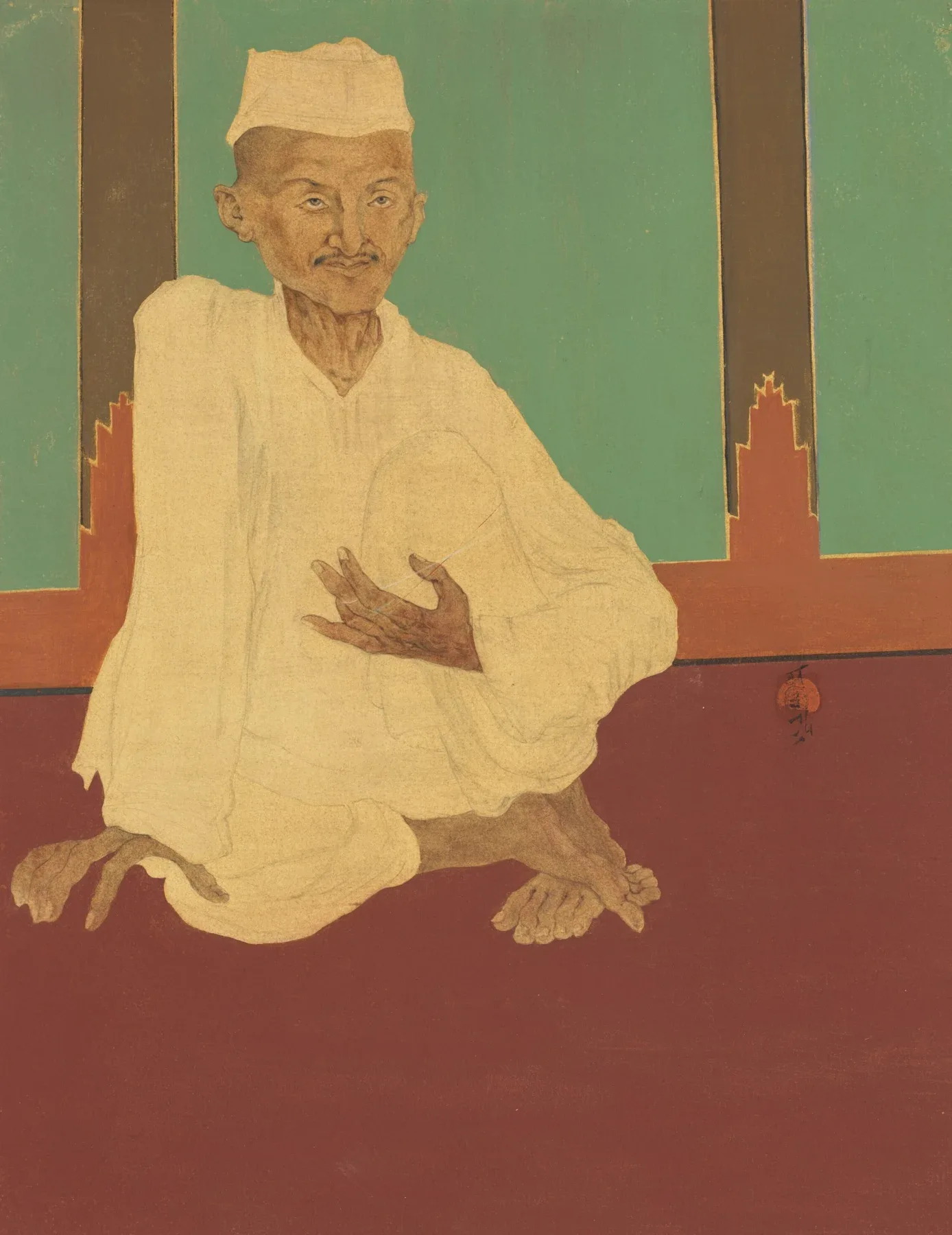
The Christie’s sale also saw auction records achieved by Abanindranath Tagore and Kattingeri Krishna Hebbar . Tagore is considered a foundational figure in Indian modern art from the first half of the 20th century and his portrait of a seemingly omniscient Mahatma Gandhi seated in a white kurta from 1922 sold for just over £1 million ($1.34 million)
—trouncing its high estimate of £50,000 ($67,000). Tagore’s second most expensive work at auction is Untitled (Siva-Simantini), which sold for $555,750 in 2013 according to the Artnet Price Database . Hebbar, known for blending Western and Indian artistic techniques in depictions of ordinary people, achieved £698,500 ($937,000) for Untitled (Gulmohar Tree) (1962) with a second work Untitled (Woman Making Chapatis) (1959)
netting £406,400 ($545,000). His previous auction record was set in March of this year at Sotheby’s New York, when Ajanta (1974) sold for $768,000.
Hebbar’s sales, Kaji said, evidence a collector breadth and appetite that “separates a healthy market from a moment.”
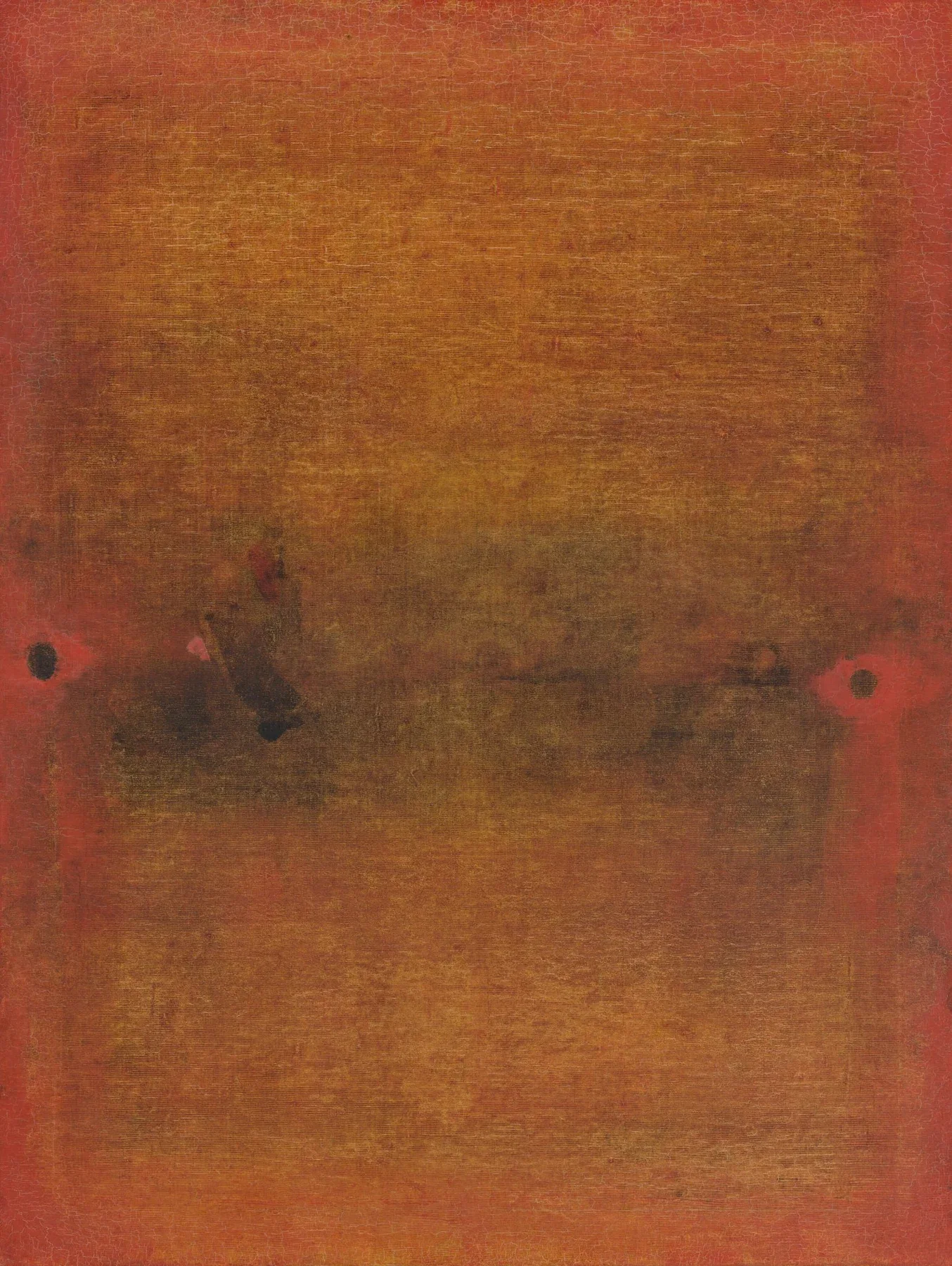
Also of note was a searing orange and red abstract made by Vasudeo S.
Gaitonde while living in New York. Untitled (1971) realized £2.3 million ($3 million). Gaitonde’s record at auction is $14 million paid for an untitled golden-yellow canvas at Saffronart, Mumbai, in 2013.
The London sale carries on the momentum Christie’s rode in New York back in March when its South Asian Modern and contemporary art auction realized $27 million, also a record for the category. Across the continent’s five major regions—China, India, Japan, Korea, and Southeast Asia—India has emerged as the strongest performer. According to Artnet data, 2025 saw a sell-through rate of 89 percent and the Mumbai-based auction house AstaGuru noted revenue grew 138 percent between 2023–24 and 2025–26.
“South Asian art is firmly in the spotlight on the global stage,” Damian Vesey , a South Asia specialist at Christie’s, said over email. “The results were sublime, reflecting extraordinary demand and strong competition across the sale from start to finish. It was a real thrill.”
Read the argument alongside market data
Source & reading notes
Christie’s London Sale Confirms Growing Appetite for South Asian Art
Richard Whiddington · Artnet News · 2026-06-12
The English reading retains the supplied article’s wording, with navigation, advertising and recommendations removed. The Chinese edition is an editorial guide, not a parallel translation. Observations refer to the publication date. Art Value Lab commentary does not represent the author’s views. Image rights remain with their respective owners.