BEYOND CHAPTER 16 · Rights and responsibility
How does stolen art find its way home?
Does appearing in a museum mean an object’s history is beyond question?
In this chapter
Imagine that fragments found elsewhere fit a sculpture in a museum case. This is a beginning, not an ending: where did the object come from, how did it leave, and who should help decide its future?
First ask how the object was separated
Theft, illicit excavation, wartime looting and sales under persecution can all separate objects from people or places, but they call for different evidence. Establish who lost what, when, and which records survive. An object’s present display location cannot by itself establish whether its earlier acquisition was lawful.
When reading about stolen art, look beyond its price. What family memories, community connections or information about an excavation site have been lost? Following the object also means asking about the lives and relationships of which it was once a part.
A convincing ownership story still needs evidence
Provenance records trace an object’s ownership and transfers. Old photographs, exhibition labels and purchase documents may support one another, but age alone does not make them reliable. Check dimensions, materials and distinctive damage against the records instead of relying on a list of prestigious owners.
Fictional exercise: a seller says a painting appeared in an exhibition, and its reverse carries a label. The catalogue lists a similar title but different dimensions. Record the discrepancy, then investigate reframing, trimming or a different work. The discrepancy alone is not proof of forgery.
Try three columns in your research notes: the claim, the available evidence and the unresolved question. A clue may support a date without establishing a sale. This also helps distinguish several independent sources from several websites repeating the same claim.
A receipt cannot tell the whole story of a sale
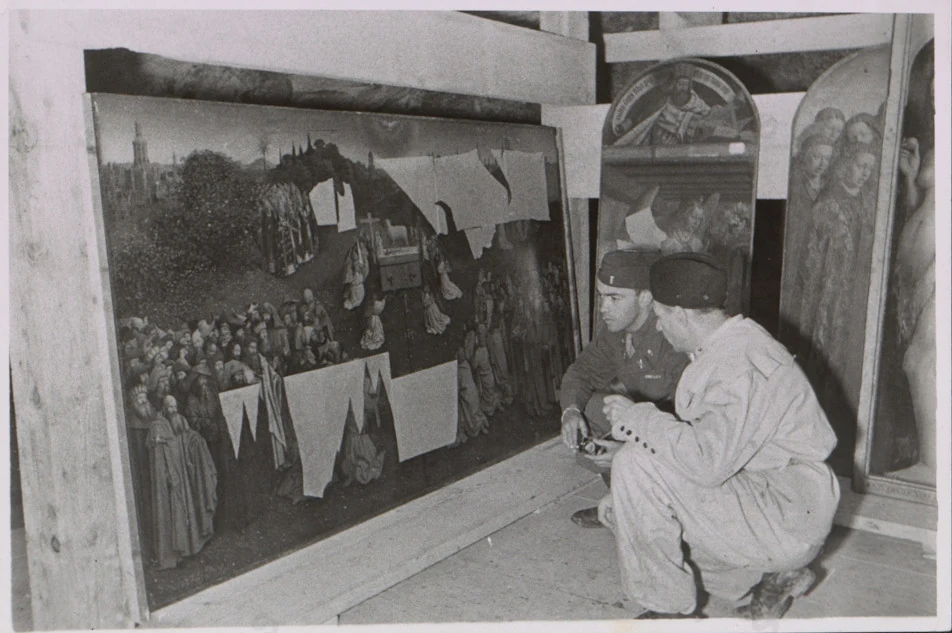
Research into losses during Nazi persecution between 1933 and 1945 must look beyond direct confiscation. Sales connected with flight, persecution or the destruction of a livelihood require historical context. A transaction record may document a transfer without establishing whether the person had a meaningful choice.
Restitution research therefore reads biographies, correspondence and transaction dates together. Gaps should remain visible, and persecution should remain part of the account. Instead of treating every wartime transaction alike, ask what evidence explains the circumstances, pressures and destination of the proceeds.
Identification depends on details that can be matched
Photographic comparisons, inventory numbers, conservation records and archaeological evidence contribute different clues. Strong identifications often rely on several kinds of evidence agreeing. A research record should specify whether it establishes identity, findspot or an ownership transfer: these are distinct findings.
A stolen-art database is useful, but no match is not a clearance. INTERPOL explains that unreported thefts, records not yet entered and undocumented excavated objects may be absent. Combine searches with documentary and object research, recording when and how the search was conducted.
What makes a resolution meaningful?
The 1998 Washington Principles call for just and fair solutions concerning Nazi-confiscated art. They are not a binding international treaty that replaces national laws, and the 2024 Best Practices are also legally non-binding. Read historical evidence, applicable law and the parties’ agreed arrangements as distinct elements.
As a viewer, ask three questions about a return. Were affected people or communities heard? Were the research and reasons for the agreement explained? How will the object be cared for, researched and presented afterwards? These questions do not decide a claim, but reveal what relationships a resolution may help repair.
READING COMPANION
A few useful terms
- Provenance records
- Records of an object’s ownership and transfers, evaluated alongside the object, archives and historical circumstances.
- Restitution
- A response to wrongful loss of property; its basis, recipient and process depend on the case.
- Sale under persecution
- A sale in the context of persecution and pressure, whose character requires examination of the historical circumstances.
- Findspot
- The place where an object was found or excavated; reliable records connect it with its archaeological context.
- Washington Principles
- Non-binding principles adopted in 1998 concerning Nazi-confiscated art, emphasizing research, accessible information and just and fair solutions.
YOUR TURN
If a work was exhibited in a famous museum, should you still ask about provenance?
Consider another way to think about it
Yes. An exhibition is one part of an object’s history, not a substitute for investigating earlier transfers. Identify what each document supports, retain uncertainties and remain open to new identifications and dialogue.
TAKE THIS THOUGHT WITH YOU
Tracing an object’s history means understanding the people, places and rights connected with it.
Reading notes & references
Adapted by Art Value Lab from questions in Olivia Whitting’s International Art Crime and Restitution lecture for Christie’s Education, with museum, intergovernmental and official sources for verification. This is not a rolling update on unresolved cases; invented exercises are labelled.
- Getty — Head of Hades, catalogue entry and restitution note
- Stuart E. Eizenstat — 20 Years Washington Principles: Roadmap for the Future (2018), German Lost Art Foundation
- Ministère de la Culture — Washington Principles and the 2024 Best Practices
- INTERPOL — Stolen Works of Art Database: coverage and limitations
Connect the ideas
Continue into people, works and research.
What should you check before buying art?
Bring the research questions into an actual transaction.
Continue reading16 | Does holding an object mean owning it?
Distinguish possession, ownership and cultural connections.
Continue reading12 | Whom does a museum serve today?
Move from collections to public responsibilities.
Continue reading