BEYOND CHAPTER 07 · The work of auction houses
How do auction prices climb? Understanding the rules and blind spots
What does the fall of the hammer actually establish?
In this chapter
Auction headlines often centre on a record-breaking number. That number may be the hammer price or may include the buyer’s premium. It records an auction outcome, but does not by itself establish that payment cleared, that the work’s provenance is sound, or what its artistic value should be.
This feature begins with questions raised by a video about the “dark side” of auctions, then reframes them as verifiable questions: who bids, who carries risk, who is paid, and what remains unknown? Understanding the system helps separate questions worth investigating from misconduct supported by evidence.
Read a price in three steps
One work, three kinds of information
Estimate
What it tells you
The expected price range published before the sale.
What it does not establish
A definitive artistic value, the reserve, or the final outlay.
What supports the range, and has it been updated?
Hammer price
What it tells you
The price reached at the close of this bidding process.
What it does not establish
The buyer’s total cost, the identity behind every bid, or completed payment.
What additional charges and disclosed financial arrangements apply?
Total payable and settlement
What it tells you
An invoice states what is payable; settlement records show whether it was paid.
What it does not establish
An invoice amount alone cannot establish that funds cleared or that provenance is sound.
Does the record state an amount due or confirm payment?
These steps guide your reading; they do not imply that every lot completes a transaction.
Where does a high price begin?
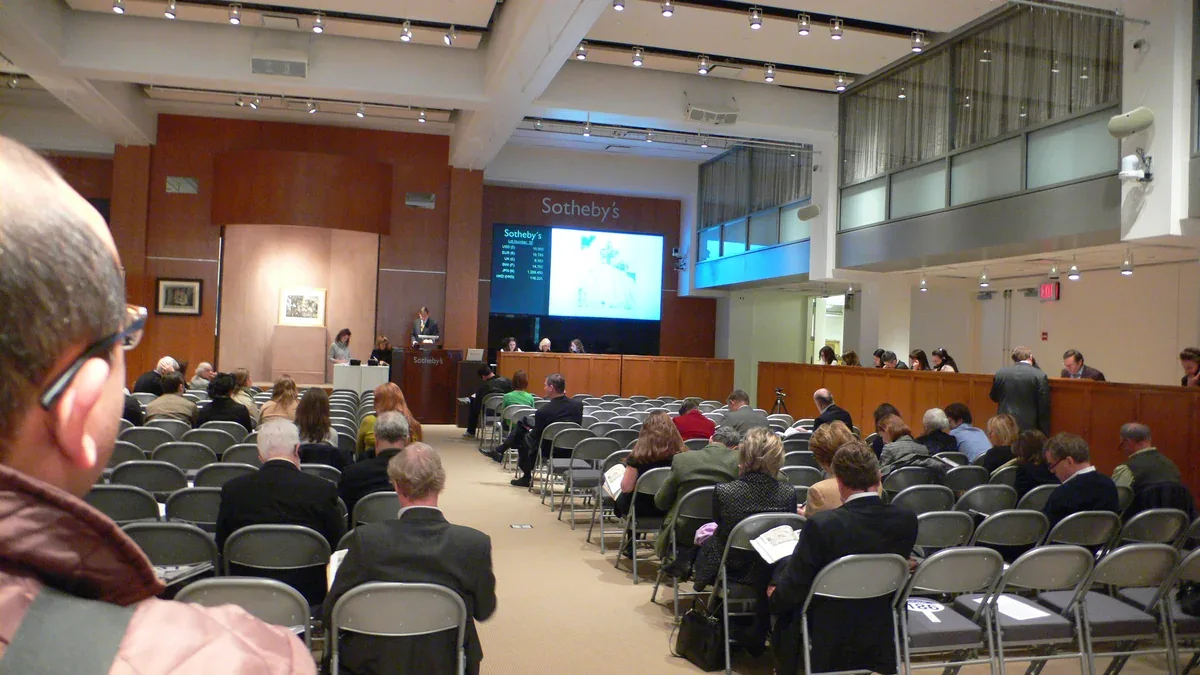
A catalogue estimate expresses the auction house’s judgement about a possible price and communicates that judgement to the market. Importance, condition, provenance and comparable transactions inform it; the number of bidders and demand on the day can push the result outside the range. Exceeding an estimate does not itself establish deliberate deception.
The estimate, reserve and hammer price serve different purposes. The reserve is the seller’s minimum sale-price arrangement and is usually confidential; the estimate is a public range; the hammer price is the price reached when bidding closes. Christie’s Hong Kong conditions dated September 2026 expressly say that estimates guarantee neither price nor value and exclude the buyer’s premium and taxes.
An estimate is often the first reference point a reader sees. Suppose a catalogue gives a range of 800,000 to 1.2 million. Ask which comparable sales, dimensions, dates, condition and provenance would inform your judgement if that range were hidden. This exercise helps you avoid treating the estimate as your only mental starting point; it does not establish deliberate underpricing. The estimate is neither the reserve nor a guarantee of a future resale price.
When watching an auction, separate two questions: what makes the work worth collecting, and do I want to win more simply because someone else has bid? Stories, scarcity and audience reactions are clues to the bidding experience, but applause cannot establish that a buyer has lost their judgement. As an exercise, set a total spending limit that includes the premium and other charges, then ask whether each higher bid brings any new information about the work.
- What the evidence supports
- Official conditions distinguish estimates, reserves and charges payable.
- What it does not establish
- One result above estimate cannot establish deliberate underpricing or price manipulation.
A question to take with youDoes the reported price include the premium, and are the comparison prices measured on the same basis?
Who is actually bidding?
Room, telephone, absentee and online bidding give buyers different ways to participate. A buyer’s absence from the camera does not make a bid fictitious. Public anonymity also does not mean that an auction house has no knowledge of its client’s identity. What spectators see is only part of the transaction record.
Some conditions allow the auctioneer to bid for the seller, but their boundaries differ. Christie’s Hong Kong conditions dated September 2026 describe bidding below the reserve; Sotheby’s Hong Kong conditions dated July 2026 use a different boundary. Neither counting every called bid as a separate collector nor automatically calling a disclosed mechanism fraud is a sound reading.
Christie’s official result records Salvator Mundi selling in New York on 15 November 2017 for US$450,312,500, including the buyer’s premium. Its account also records the winning bid being made for a client on the telephone. This establishes the basis of the published price and the bidding channel; that page alone does not establish the ultimate beneficial owner, source of funds or payment settlement.
- What the evidence supports
- The DOJ announcement records a guilty plea and sentence.
- What it does not establish
- This case does not establish that telephone bidding, or the market as a whole, involves shill bidding.
A question to take with youWhat evidence identifies this bidder, their authority and the applicable conditions?
Who carries risk and receives compensation?
A guarantee may be arranged before the auction. A minimum-price guarantee concerns the proceeds promised to the seller. A third party may share the risk through a binding bid and must buy if no higher bid arrives. Guarantees and irrevocable bids are related, but are not interchangeable concepts.
The party taking that risk may receive compensation and may continue bidding, which makes catalogue symbols and financial-interest disclosures important. Whether compensation exists, how it is calculated and how it affects the reported price depend on the house, location and arrangement. A universal percentage is misleading; a financial benefit alone does not establish a sham transaction.
- What the evidence supports
- Official guides disclose guarantees, third-party commitments and possible compensation.
- What it does not establish
- A symbol may not disclose every contractual detail, and the two houses’ accounting treatments should not be combined.
A question to take with youDoes anyone advising on or bidding for this lot have a financial interest in it?
Is the transaction complete after the hammer?
The hammer falling, an invoice being issued, payment clearing and the work being delivered are separate events. A public result can record a sale without independently establishing that funds arrived. Equally, missing payment information is not evidence of non-payment. Preserve “unknown” as a valid category when using price data.
Before comparing prices, check currency, date, whether the premium is included and whether the work actually sold. Unsold, withdrawn and not fully paid are different statuses. Preserve any settlement notes in the research rather than asking a single database number to establish more than it can.
The Old Summer Palace rat and rabbit heads offer another example. The National Museum of China records that each reached €14 million at a Paris auction in 2009, but the winning bidder subsequently announced that payment would not be made. The Pinault family later acquired the bronzes separately and donated them to the museum in 2013. Reading this history requires separate records for the bidding result, non-payment, and the later acquisition and cultural return, rather than treating them as one completed auction transaction.
- What the evidence supports
- The original release supports a not-fully-paid statistic for a specific year, location and price range.
- What it does not establish
- Not fully paid does not mean never paid, and the figure cannot simply be extended to the whole market.
A question to take with youDoes this record describe bidding, a premium-inclusive sale price, or a transaction with confirmed settlement?
What happens when a work enters storage?
Freeports and bonded storage are not one uniform system; tax and customs arrangements vary. The US Treasury’s 2022 report describes legitimate storage purposes, including security, insurance and tax treatment, alongside risks when ownership changes while an artwork stays in place and information is hard to trace. Storage alone is not evidence of money laundering, and a warehouse is not outside the law. Check the storage location, ownership and applicable reporting records separately.
For example, official UK customs-warehousing guidance describes delaying import duty and VAT while eligible goods are stored; charges generally become payable when goods are released into free circulation. This concerns the timing of tax under a particular system, not a promise that a work is permanently tax-free or a rule for every freeport or bonded warehouse.
- What the evidence supports
- Government sources describe both legitimate storage uses and risks arising from opaque ownership information.
- What it does not establish
- Storage location, physical movement and ownership transfer are separate matters. An address alone cannot establish tax evasion or money laundering.
A question to take with youWhere is the work, who owns it, which documents record transfers, and which jurisdiction’s rules apply?
Provenance is a chain of records to check
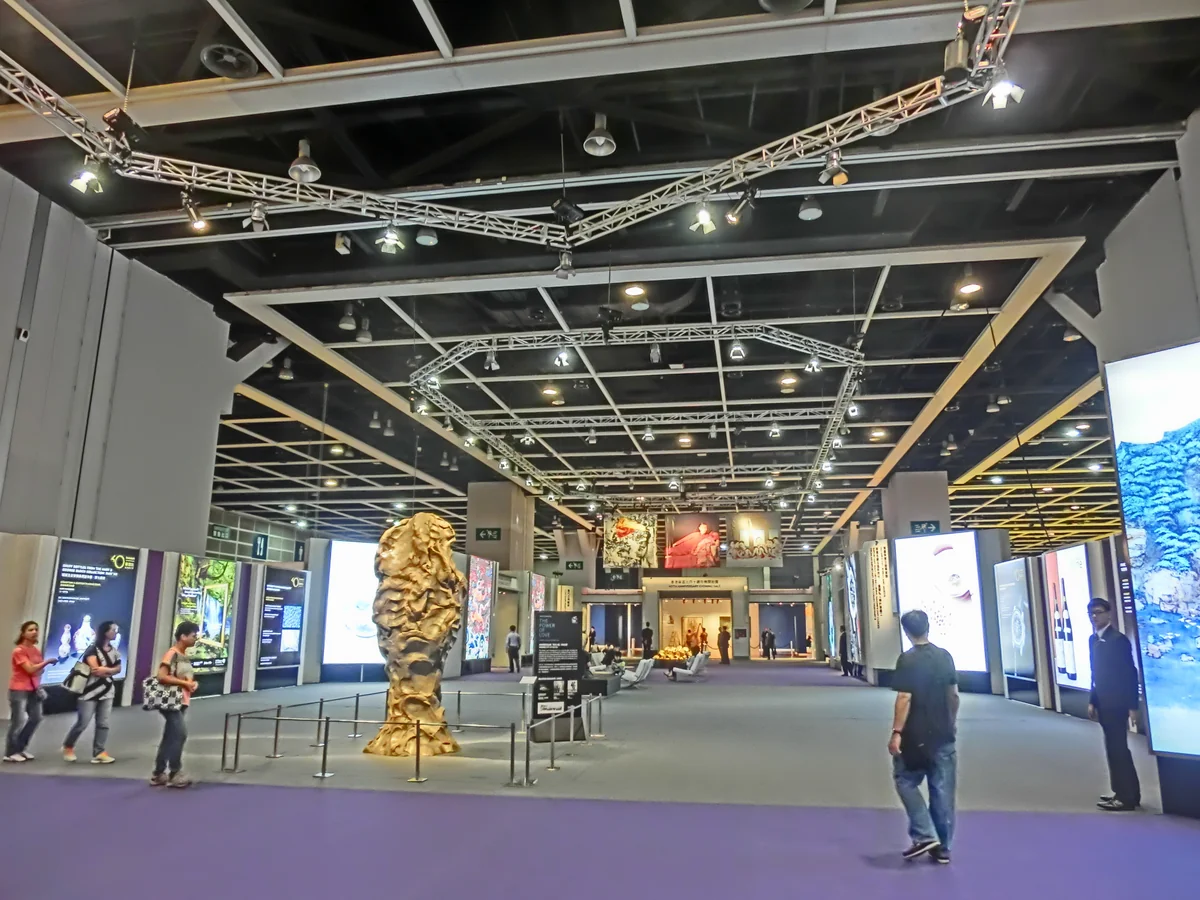
When a description says “old European private collection,” ask who held the object, when, and which records corroborate the story. ICOM’s museum accessioning guidance identifies purchase and insurance documents, earlier ownership records, import and export papers, catalogues, inventories and correspondence as evidence to examine. A useful reading method is to compare dates, object details and transfers while preserving unresolved gaps. Provenance, authority to sell and lawful import or export are separate questions; one certificate or auction record cannot replace the whole inquiry.
Arrange each period of ownership on a timeline, alongside its supporting documents and unresolved questions. Do the title, dimensions, materials or photographs match the work? Are there gaps between dates? The ICOM document is professional museum guidance, used here as a reading method rather than legislation binding every collector.
- What the evidence supports
- The accessioning guide identifies document types that can be cross-checked to establish provenance.
- What it does not establish
- A gap does not establish illegality, and one certificate cannot resolve every provenance or ownership question.
A question to take with youWhich independent records corroborate this provenance account and identify the same object?
How should you investigate a risk?
High prices, intermediaries and cross-border transactions can make verification harder, but are not shortcuts to a finding of crime. Separate the questions: where did the object come from, who has authority to sell it, are interests disclosed, and are there reliable records of funds and payment? Each question requires different evidence; a dramatic narrative cannot answer them all.
Art can serve as collateral for a loan. That may be ordinary financing, or it may be used to obscure the origin of funds; obtaining a loan does not make the original funds lawful. Provenance and ownership require their own documentary evidence and applicable rules. Appearance in a prominent auction catalogue is no substitute for verification.
- What the evidence supports
- The Treasury study discusses market characteristics and risks of abuse in art-backed lending.
- What it does not establish
- A market-level risk does not establish wrongdoing by a particular buyer or in a particular transaction.
A question to take with youDo you have original records and reliable case-specific evidence, or only inference and rumour?
READING COMPANION
A few useful terms
- Estimate
- A published pre-sale price range. It is not a guarantee of value and does not necessarily include premiums or taxes.
- Reserve
- The seller’s minimum sale-price arrangement, usually confidential. Its relationship to the estimate depends on the sale conditions.
- Hammer price
- The price reached when bidding closes, before the buyer’s premium and other applicable charges.
- Minimum-price guarantee
- An arrangement assuring the seller agreed minimum proceeds. The auction house and a third party may share the risk.
- Irrevocable bid
- A binding bid under which the bidder must buy if no higher bid is made, subject to the agreement’s terms.
- Shill bidding
- Phony bidding used to create an appearance of demand or raise prices. Responsibility in a specific case depends on evidence, applicable law and conditions.
- Payment settlement
- The status of payment having been completed, which cannot be established solely by the hammer falling or a published sale result.
- Freeport
- An area operating under particular customs or tax arrangements. Systems and controls vary by jurisdiction; it is neither outside the law nor necessarily permanently tax-free.
- Bonded warehouse
- A facility storing goods under an applicable customs system, potentially deferring certain import charges. Release, transfers and reporting remain subject to local rules.
- Provenance records
- Evidence of an object’s ownership and transfers, such as purchase documents, catalogues, inventories, correspondence and import or export records. Records need cross-checking, with gaps kept visible.
YOUR TURN
When a headline says “sold for ten times the estimate,” which three questions would you ask first?
Consider another way to think about it
First check whether the price includes the premium, then read the lot’s conditions and financial-interest disclosures, and finally establish what the payment information supports. A result far above estimate deserves investigation, but does not alone prove either that the work is worth that sum or that someone cheated.
TAKE THIS THOUGHT WITH YOU
Every auction number tells you something and leaves other questions to verify. Matching conclusions to evidence is the starting point for understanding the market.
Reading notes & references
Art Value Lab takes an auction commentary video by 腦洞大開 / Ayou as its starting point, revisiting its questions through published conditions and primary sources. Conditions vary by auction house, location, sale date and lot notices; historical cases and statistics retain their original dates and scope.
- 腦洞大開/阿佑 · Auction commentary video
- Christie’s Hong Kong Live Conditions of Sale — 1 September 2026, A5 / C2 / C5
- Sotheby’s Hong Kong Conditions of Business for Buyers — July 2026, 7 / 8
- Christie’s — Financial information: guarantees and third-party guarantees
- Sotheby’s — Guide for Buyers: Symbol Key
- Christie’s — Payment and shipping
- US Department of Justice — Mastro sentencing announcement, 21 August 2015
- artnet / CAA — Global Chinese Art Auction Market Report 2014 press release, 23 September 2015
- US Treasury — High-value art market study announcement, 4 February 2022
- US Treasury — Study of money laundering and terror finance through the trade in works of art, February 2022
- 中國國家博物館/國家文物局 — 國寶回歸見證中法友誼:鼠首、兔首的拍賣與回歸
- Christie’s — Leonardo and Post-War results, New York, 15 November 2017
- HM Revenue & Customs — How to use a customs warehouse
- ICOM — Guidelines on Accessioning of the International Council of Museums (approved December 2020)
Connect the ideas
Continue into people, works and research.
07 | Inside auction houses: before and after the hammer
Return to the auction process: consignment, previews and bidding.
Continue reading14 | Read the evidence behind a price
Separate price definitions, transaction status and the basis for comparison.
Continue reading16 | Does holding an object mean owning it?
Examine evidence for provenance, ownership and authority to sell.
Continue reading19 | When art becomes the next hot trade
Explore speculation, price signals and market cycles.
Continue reading