BEYOND CHAPTER 11 · Collections and public purpose
Four approaches to collecting
Does collecting change only who owns an artwork?
In this chapter
When a work enters a collection, it may gain production support or new audiences, or spend years in a private space. Treating collecting history as a list of wealthy names misses its most interesting decisions: what to support, how to show it and whom to entrust with its future.
Each of these four cases opens a different question. Rather than first deciding who had the best eye, compare what they contributed beyond money: time, relationships and arrangements for the collection’s future.
Collecting also shapes an identity
The course opens with cabinets of curiosities and collectors’ portraits. Placing natural objects, antiquities and artworks together offers a way to read a display: what sits together, and what receives the most prominent position? The arrangement itself proposes a way of understanding the world.
Research presented by The Courtauld describes Andrea Odoni as outside Venice’s ruling nobility, yet using his collection and Lotto’s portrait to establish an identity. When looking at such a painting, ask whether the objects describe a life or the self its subject wanted others to see.
Shchukin: making room for a work to happen
Sergei Shchukin collected French modern art and commissioned Matisse to make works for his palace staircase. Dance and Music can therefore be understood through their intended space, scale and commission, as well as through their later fame.
Fondation Louis Vuitton’s retrospective reunited works from the collection so that their relationships could be seen again. A collector may participate in a work’s creation through a commission; later curators reinterpret those decisions through research and juxtaposition.
Peggy Guggenheim: support beyond a purchase
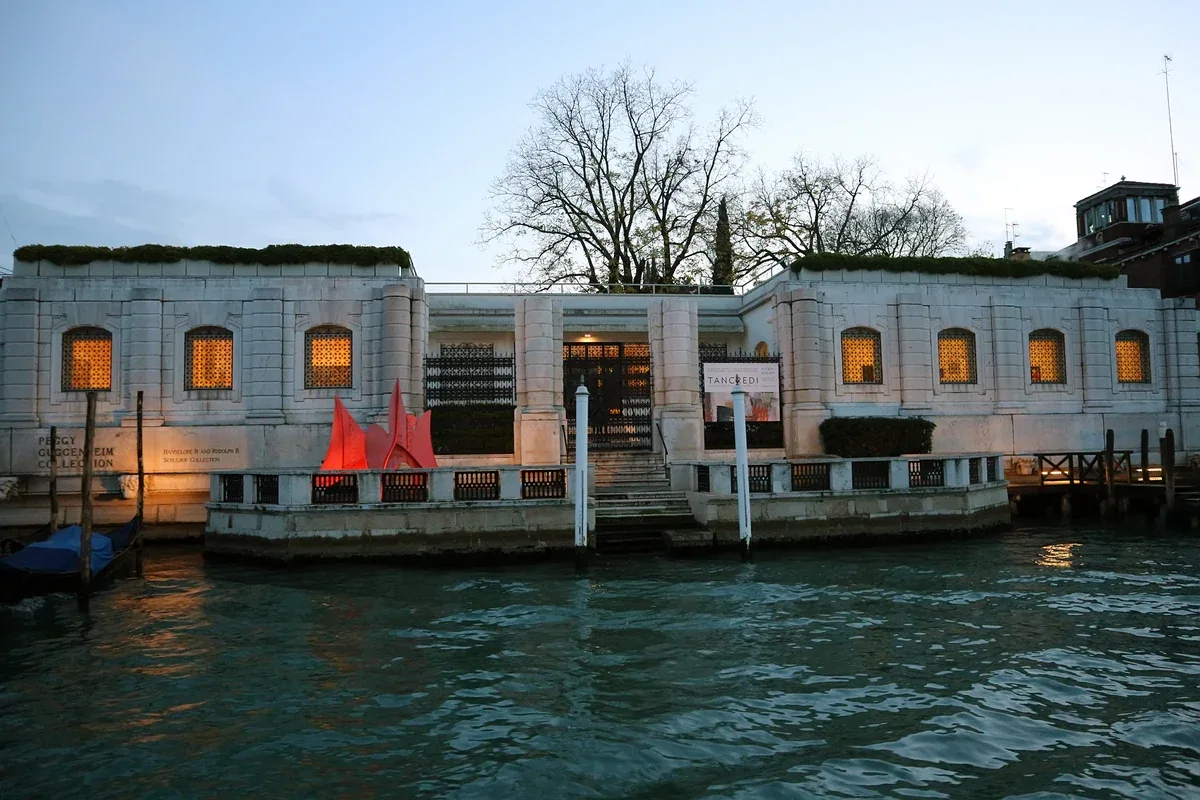
Peggy Guggenheim opened Art of This Century in New York to present her collection and artists’ exhibitions. She gave Pollock solo shows and a stipend and commissioned Mural. The work’s development thus involved exhibitions, income and room to experiment, alongside transactions.
She later opened her home collection in Venice to visitors. Her example raises a question about continuity: after a work is bought, what arrangements enable the artist to keep working and the work to be studied and seen?
The Vogels: sustained commitment within limits
The National Gallery of Art records that Dorothy and Herbert Vogel considered affordability, transport home and space in their apartment when choosing works. These constraints suggest a practical collecting method: live with art over time and concentrate on what you can continue to understand and care for.
They later placed their collection with public institutions. The Fifty Works for Fifty States initiative distributed 2,500 works among 50 museums, one in each US state. A collection’s future can therefore involve widening geographic access as well as keeping objects together.
Saatchi: exhibitions amplify a collection
Saatchi Gallery opened in 1985. Its Young British Artists series and the Royal Academy’s Sensation exhibition later brought privately collected works to a larger stage. Collecting, selection and exhibition titles all helped shape how audiences recognised a group of artists.
Read both the works and the frame around them: who was selected, and who is absent? Do visitors remember the questions posed by the art or the collector’s brand? Visibility matters, but it is only one condition through which artistic judgements develop.
READING COMPANION
A few useful terms
- Cabinet of curiosities
- A collecting space combining natural objects, antiquities, crafted objects or artworks. Its categories and arrangement reveal aspects of the collector’s knowledge and taste.
- Commission
- An arrangement with an artist for a work yet to be made, addressing its purpose, payment or delivery. The degree of artistic freedom varies between commissions.
- Patronage
- Support for artists or artistic activity through money, opportunities or other resources, either over time or for a specific project.
- Public access
- The practical conditions under which people can encounter works and knowledge about them, including location, hours, cost, language and accessibility.
- Collection stewardship
- Continuing responsibility for works, documentation, preservation and future use, extending beyond where to display an object today.
YOUR TURN
If you could choose only three works, what question would you ask them to explore together?
Consider another way to think about it
Write a collecting focus and a reason for each selection. Then add one public commitment, such as bookable visits, clear online documentation or a school partnership, and consider how it changes your choices.
TAKE THIS THOUGHT WITH YOU
A collector’s influence grows through decisions that continue after purchase: supporting creation, arranging encounters and taking responsibility for a work’s future.
Reading notes & references
Developed by Art Value Lab from learning themes in Dr Ben Street’s Christie’s Education slides, Private and iconic collections, with cases checked against collecting institutions’ records.
- The Courtauld — The Art Collector in Early Modern Italy: Andrea Odoni and his Venetian Palace
- Fondation Louis Vuitton — Icons of Modern Art: The Shchukin Collection
- Peggy Guggenheim Collection — About Peggy
- National Gallery of Art — How Herb and Dorothy Vogel Built One of the Greatest Modern Art Collections—and Then Gave It All Away
- Saatchi Gallery — 40 Years of Exhibitions (2025)
Connect the ideas
Continue into people, works and research.
What are we seeking when we collect art?
Connect these cases with your own collecting motives.
Continue readingHow do private collections enter public life?
Distinguish opening a collection, donating it and accepting public responsibilities.
Continue readingWho supports museums?
Explore the relationship between giving and museum operations.
Continue reading